


21 Ymiden 722
Dan grimaced at the way that a recent storm had left the more trampled areas around his camp streaked and piled with mud, and shoved another spoonful of soup into his mouth. One of the piles of mud reminded him of the mud wall windbreaks that he sometimes made to shield his fire. Mud was easy to build with, and you could use it in different ways, depending on what other materials you had available, how much time, and how sturdy you wanted the finished result to be. The lightest form was wattle and daub, where you wove a loose framework of thin sticks like a hurdle (otherwise known as the wattle) and then plastered a layer of mud (otherwise known as the daub) over the top to fill in the gaps. It was quick and easy and effective, but not particularly sturdy. Then there was mud, made into walls by the simple dint of piling it high and letting it dry. Not quite as quick as wattle and daub, they were stiffer, sturdier, and less prone to drafts, and required only the mud rather than mud and wood, they lasted a season or a cycle, if you were lucky with the weather. Then, finally, there was rammed earth, where you took a pile of dirt, like a dried mud wall, and pounded it with a ram until it set like stone. It endured like stone too, he'd found a few rammed earth walls and shelters that were still around arcs later, but the pounding required meant that they took a lot more time and effort to build than a simple mud wall.
He sighed, and stretched, draining the last of his soup and looking around him. A stack of six slings, the product of a long morning's work, lay on one side of him, while on the other, a stack of cured rabbit skins waited for him to finish his lunch so that they could to be turned into more slings. They were somewhat fiddly to make, due to the precision needed, but well within his own skills, and they were popular with farmers and herders. Slings didn't require specialised ammunition the way that bows did, only stones that could be picked from any stream or field. That meant that they were easy and light to carry, both for him, and for the eventual user, and often accepted in trade when he needed to barter for feed for the ponies, or oil for his lantern, or any of the other small things that somewhere settled could make more easily than he could.
He washed his bowl and spoon, gulped down some water and took his place again. He picked up the top rabbit skin, tanned into soft leather for this, rather than left as a fur, and scooped up a bit of charcoal to draw with. He drew the outline of the leaf shaped pocket that would, when the sling was complete, hold the stones, against one edge of the skin, and the very start of the straps leading out from the pocket, and then put the charcoal away for now. Instead, he unsheathed a very sharp knife and slid a flat wooden cutting board between the leather and his legs to protect himself and make it easier to cut cleanly. Each sling strap was made by cutting exactly half the skin in a spiral so that none of the leather went to waste, and when the strap was straightened out, it actually lay straight and flat, with no awkward bends or sharp angles to disrupt the swing and release of the stone or prevent it from flying straight and true. Using half the skin for each one also, in theory, meant that both straps would end up exactly the same length. He also had to make sure that the spiral cuts were clean and smooth, with no nicks or indents that might cause the sling to tear or snap under the strain of constantly twisting and untwisting as it was used. In addition, making the whole thing as one piece of leather prevented any seams from becoming weak points and places that could skew the aim of the stone.
He started on the outside edge of the rabbit hide so that, at the same time and with the same cut, he could both remove the more ragged outline of the hide where the skin had been removed from the animal and stretched out, and shape the first of the straps. It was never very much being sliced off and tumbling to the ground at his feet in an untidy curl - not these days at least - but it did smooth out the far side of the first of the sling straps.
He used his other hand to hold the hide flat and still, pinning it down with fingers or the flat of his hand as necessary in order to hold the whole thing as steady as he could.
The knife, and the cut that it made went round the outside and then carefully up the middle line that separated the two halves of the skin. It curved along the edge of the leaf shaped stone pouch that Dan had drawn on the skin at the start, and then ended up precisely one strap width from the first cut. From there, the spiral paralleled the previous line as it wound its way in to the centre of the first strap's half of the skin. It took care and precision to keep the strap even, with the cuts exactly parallel, and the tip of Dan's tongue poked out of the corner of his mouth as he concentrated hard. His hands, however, knew what to do by now and they moved in one slow smooth slice, making it look far easier than it actually was.
At the end of the first strap, Dan took a moment to breathe and stretch and flex hands that ached a little from the fierce level of control he was using. Then he turned the skin around so that he could more easily get at the other half, made sure that none of the first strap had gotten tucked under the leather for the second strap, and took a deep breath. Picking up the knife again, he began on the second strap, which ran in the same way as the first, except that it spiraled in the opposite direction.
The last scrap of leather fell away and he held a seventh sling in his hands. He checked it over before he put it in the pile with the others, but it was fine. He shook the worst of the knots out his hand muscles, squinted at the sky to get a feel for where the sun was and picked up another hide. If he could just keep going at this rate, he could get a full dozen done before he lost the light and had to stop for the trial.
He got his full dozen in the end, though he had to push himself harder and faster than he liked to get the last one finished, but at last he could coil each of the slings up so that they didn't tangle (either with each other or with themselves) and set them aside, out of his immediate way but easy to access if he needed them. Then he stretched, rolling shoulders that were stiff from bending over his work, and shaking out legs that had earned muscle knots of tension by keeping painfully still so that he didn't jostle the cutting board over his knees. He rubbed fiercely aching hands, and took a deep breath, then another. The land around him smelled alive, with all the green and growing scents carried more strongly on the damp air and the breeze.
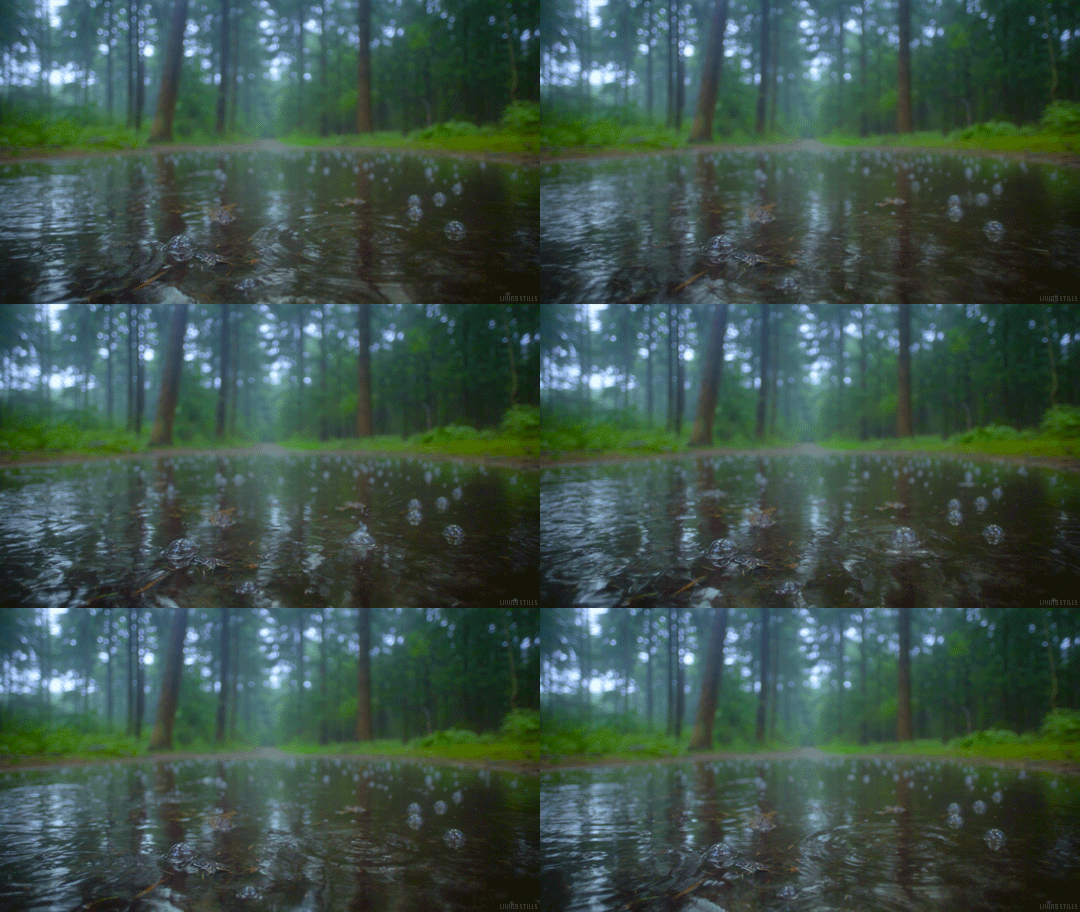
He stood for a long moment just looking at it, enjoying the sight of the trees and the Ymiden wildflowers and swelling fruits. It was a quiet, peaceful beauty, even in the dusk of the evening. Behind him, the ponies grazed with the sound of tearing grass, and the low ebb of the fire still sent a tendril of smoke and a flicker of flame dancing into the air. Above him, the first stars were beginning to wink into place, unfazed by the remnants of the storm clouds. If he had to live in the moment, he thought, this wouldn't be that bad a moment to be caught in, despite the aches and pains of hard work.
He smiled ruefully to himself, knowing that quiet moments like this one never did last, and turned away from the night to find himself another bowl of fish soup.
Filler Text, Filler Text
"Signed words" Spoken words
Dan grimaced at the way that a recent storm had left the more trampled areas around his camp streaked and piled with mud, and shoved another spoonful of soup into his mouth. One of the piles of mud reminded him of the mud wall windbreaks that he sometimes made to shield his fire. Mud was easy to build with, and you could use it in different ways, depending on what other materials you had available, how much time, and how sturdy you wanted the finished result to be. The lightest form was wattle and daub, where you wove a loose framework of thin sticks like a hurdle (otherwise known as the wattle) and then plastered a layer of mud (otherwise known as the daub) over the top to fill in the gaps. It was quick and easy and effective, but not particularly sturdy. Then there was mud, made into walls by the simple dint of piling it high and letting it dry. Not quite as quick as wattle and daub, they were stiffer, sturdier, and less prone to drafts, and required only the mud rather than mud and wood, they lasted a season or a cycle, if you were lucky with the weather. Then, finally, there was rammed earth, where you took a pile of dirt, like a dried mud wall, and pounded it with a ram until it set like stone. It endured like stone too, he'd found a few rammed earth walls and shelters that were still around arcs later, but the pounding required meant that they took a lot more time and effort to build than a simple mud wall.
He sighed, and stretched, draining the last of his soup and looking around him. A stack of six slings, the product of a long morning's work, lay on one side of him, while on the other, a stack of cured rabbit skins waited for him to finish his lunch so that they could to be turned into more slings. They were somewhat fiddly to make, due to the precision needed, but well within his own skills, and they were popular with farmers and herders. Slings didn't require specialised ammunition the way that bows did, only stones that could be picked from any stream or field. That meant that they were easy and light to carry, both for him, and for the eventual user, and often accepted in trade when he needed to barter for feed for the ponies, or oil for his lantern, or any of the other small things that somewhere settled could make more easily than he could.
He washed his bowl and spoon, gulped down some water and took his place again. He picked up the top rabbit skin, tanned into soft leather for this, rather than left as a fur, and scooped up a bit of charcoal to draw with. He drew the outline of the leaf shaped pocket that would, when the sling was complete, hold the stones, against one edge of the skin, and the very start of the straps leading out from the pocket, and then put the charcoal away for now. Instead, he unsheathed a very sharp knife and slid a flat wooden cutting board between the leather and his legs to protect himself and make it easier to cut cleanly. Each sling strap was made by cutting exactly half the skin in a spiral so that none of the leather went to waste, and when the strap was straightened out, it actually lay straight and flat, with no awkward bends or sharp angles to disrupt the swing and release of the stone or prevent it from flying straight and true. Using half the skin for each one also, in theory, meant that both straps would end up exactly the same length. He also had to make sure that the spiral cuts were clean and smooth, with no nicks or indents that might cause the sling to tear or snap under the strain of constantly twisting and untwisting as it was used. In addition, making the whole thing as one piece of leather prevented any seams from becoming weak points and places that could skew the aim of the stone.
He started on the outside edge of the rabbit hide so that, at the same time and with the same cut, he could both remove the more ragged outline of the hide where the skin had been removed from the animal and stretched out, and shape the first of the straps. It was never very much being sliced off and tumbling to the ground at his feet in an untidy curl - not these days at least - but it did smooth out the far side of the first of the sling straps.
He used his other hand to hold the hide flat and still, pinning it down with fingers or the flat of his hand as necessary in order to hold the whole thing as steady as he could.
The knife, and the cut that it made went round the outside and then carefully up the middle line that separated the two halves of the skin. It curved along the edge of the leaf shaped stone pouch that Dan had drawn on the skin at the start, and then ended up precisely one strap width from the first cut. From there, the spiral paralleled the previous line as it wound its way in to the centre of the first strap's half of the skin. It took care and precision to keep the strap even, with the cuts exactly parallel, and the tip of Dan's tongue poked out of the corner of his mouth as he concentrated hard. His hands, however, knew what to do by now and they moved in one slow smooth slice, making it look far easier than it actually was.
At the end of the first strap, Dan took a moment to breathe and stretch and flex hands that ached a little from the fierce level of control he was using. Then he turned the skin around so that he could more easily get at the other half, made sure that none of the first strap had gotten tucked under the leather for the second strap, and took a deep breath. Picking up the knife again, he began on the second strap, which ran in the same way as the first, except that it spiraled in the opposite direction.
The last scrap of leather fell away and he held a seventh sling in his hands. He checked it over before he put it in the pile with the others, but it was fine. He shook the worst of the knots out his hand muscles, squinted at the sky to get a feel for where the sun was and picked up another hide. If he could just keep going at this rate, he could get a full dozen done before he lost the light and had to stop for the trial.
He got his full dozen in the end, though he had to push himself harder and faster than he liked to get the last one finished, but at last he could coil each of the slings up so that they didn't tangle (either with each other or with themselves) and set them aside, out of his immediate way but easy to access if he needed them. Then he stretched, rolling shoulders that were stiff from bending over his work, and shaking out legs that had earned muscle knots of tension by keeping painfully still so that he didn't jostle the cutting board over his knees. He rubbed fiercely aching hands, and took a deep breath, then another. The land around him smelled alive, with all the green and growing scents carried more strongly on the damp air and the breeze.
He stood for a long moment just looking at it, enjoying the sight of the trees and the Ymiden wildflowers and swelling fruits. It was a quiet, peaceful beauty, even in the dusk of the evening. Behind him, the ponies grazed with the sound of tearing grass, and the low ebb of the fire still sent a tendril of smoke and a flicker of flame dancing into the air. Above him, the first stars were beginning to wink into place, unfazed by the remnants of the storm clouds. If he had to live in the moment, he thought, this wouldn't be that bad a moment to be caught in, despite the aches and pains of hard work.
He smiled ruefully to himself, knowing that quiet moments like this one never did last, and turned away from the night to find himself another bowl of fish soup.
Filler Text, Filler Text
"Signed words" Spoken words