Central Fauna
These creatures can be found in the Central region and specifically in the cities of Etzos, Rharne, Rhakros, Athart, and Strosdyn. Unless specified, these animals and monsters can be self moderated.
Ascended Mantis
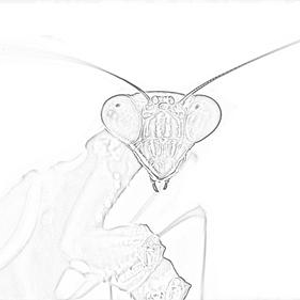
Credit: Vluharqih
- Native to: Frost Lake Woods (North of Etzos)
- Quick Facts: Five foot tall Praying Mantis
- Height: 5’
- Length: 2’
- Weight: 150-200lbs
Appearance: These mantises are visually very similar to their much smaller cousins. Their body is made up of several segments, but their bright green colouring has been mottled, resulting in an odd camouflage pattern of dark and light green across their whole body. Their shells are different, however. While their smaller cousins have hard exoskeletons, the Ascended Mantis has a shell that reacts to force.
When the shell is struck, whether by blade or hammer, the material around the strike becomes near impenetrable. The rest of the time, the shell is soft and pliable, allowing the Mantis incredible speed and flexibility. They have a limited amount of locations they can protect simultaneously, and the best strategy is to attack from multiple sides at once.
They were named as a joke; the praying mantis finally made its prayer heard, and it became Ascended. The joke was spread at the same time as the news of the insect, and the original name has been lost as it is simply remembered as the Ascended Mantis.
They still have retained their large mandibles, however they have gained an extra pair of serrated legs.
Habitat: The deeps of Frost Lake Woods. The dislike humanoids and dislike sunlight. They stick to the shadows, and will often go out of their way to avoid search parties. This has led to many assuming they are mere myth, despite multiple scientific books describing them in great detail.
Lifespan and Development: These creatures live up to 10 arcs, with similar developmental and reproductive stages as a typical praying mantis.
Diet: The insects eat small game and birds for the most part, relying on their impossibly fast reflexes to snatch them mid-run. They are also scavengers, and are not opposed to eating other game, should they catch it. They are not likely to hunt humans, though if found dead, they would most definitely be eaten.
Temperament: The Ascended Mantis is very removed from the world. It will try to run from humans whenever conflict arises, only fighting when there is no other option. Should it fight, however, it should not be underestimated. The speed it moves at can only be rivalled by the Thunder Cat, and the blades on its arms are sharp and strong enough to shatter all but the toughest of swords.
Abilities: Very fast with a strong exo-skeleton. Their shell has been used in alchemy, imbuing items with the ability to react to force. It requires a complicated and lengthy distillation process to create, and takes the body of a fully grown Mantis to imbue a breastplate with this trait. It is worth noting that metals cannot bond with this, however cloth, leather and fur can all gain the protective benefit of metal armour when this is used.
Kathor, The Shadowhounds

Credit: Aeon
- Native to: Forests around Etzos
- Quick Facts: Pitch black, quite large wolves, nocturnal, incredible agility, stealth potential during the night
- Height: Ranging from 2' to 4'2" at the shoulder
- Width: Ranging from a foot to 20 inches
- Length: Ranging from 5'5" to 8'5"
- Weight: Ranging from 360lbs to 500lbs
Appearance: The kathor appear to be hound, or even wolf-like creatures, only larger in every way. They can grow up to the height of an average human, and the length of a serpent, and their weight is far greater. Their fur is pitch black, no matter if male or female, or where they were born. In the night, they can often be looked at and not noticed, because of their color, which is what makes them such good hunters and gives them their nickname, Shadowhounds. They have retractable claws on their paws, much like cats, but a head in the shape of a wolf's. The kathor have a mane around their necks much like a lion's, which appears to be too stiff for normal hair, just like the hair on their tails.
Habitat: The kathor prefer dense forests, especially darker ones, their natural camouflage making them blend in well. Females often live in packs with a single male in forest clearings or caves, claiming such areas as their own territories, while most other males are loners that don't have their own territories. These lone kathor live a nomadic life, often found resting on strong tree branches during the day, travelling and hunting during the night. Pack territories aren't large, and will often shift depending on the time of arc and the current needs of the pack. Unless challenging the pack leader or wanting to mate, lone kathor don't venture onto pack kathor territory, but are otherwise careless on which predator's grounds they walk.
Lifespan and Development: At birth, a kathor is usually about 2 pounds, never going beyond 3, and those born far smaller are are often abandoned and left for dead by their mother. At birth, males and females are similar in size, except males more often have lighter eyes. The kathor are born blind, with their ears flopping down, just like a wolf. In the first few weeks, the kathor are indistinguishable from black wolf puppies. Only at about three seasons of age does the difference start showing, as the kathor do not howl yet and the kathor mothers more often leave the pups with the pack leader to go hunting, and for longer periods of time. Unlike wolves, the kathor pups are not very dominant, and if approached by humans at this age, they can be impressionable. From 2 to 5 seasons of age is the most common time for the kathor to be tamed by eager adventurers and many different western military forces, as their bloodthirstiness doesn't develop for several arcs.
From that point on, almost every aspect of their growth is the same as a wolf's, up until their first or second arc of life. At this point, the female kathor are regulars on nighttime hunting trips with their pack, while males are shunned away by the pack leader and forced into the wilderness. Roughly 60% of males survive until their third arc of life. These exiled males sometimes move in groups until they are fully developed and able to take care of themselves, but it is equally common for them to live alone. Many foolish attempts at taming and capturing these exiled males had been made throughout the West Idalos' history, usually resulting in humans dying, since at this period in their lives the male kathor are at their most aggressive. They will attack anything on their path, and groups of these males have been known to engage in fights with the Ne'haer Cliff Lurkers. Around the third arc of their life is when the Kathor can be considered sexually mature, however the kathor have been known to grow throughout their entire lives, at a significantly slower rate.
The Kathor have incredbile senses, starting from about this point. Their vision rivals a hawk's, both during the day and night, and they can smell things miles away. Their hearing takes a back seat during these formative arcs, and it doesn't fully develop until their seventh or eighth arc. As well as the senses, the kathor's agility increases significantly at this period, and they become the predators that they're known as. The packs often feast on hooved animals such as deer, elk, and bisons, depending on the region they're living in. In times of hunger, the pack will hunt minor animals such as rabbits, beavers or badgers. The male kathor often choose smaller prey as a result of hunting either alone or in small groups. The male loners will often attack predators in their area since the kathor are usually on the top of the local food chain. Some large kathor have even been known to kill a bear, but this is a rare occurrence considering bears and kathor hunt different prey and often don't often come near each other.
Come mating season, mostly near the end of Cylus and early to mid-Ashan, the females from the packs and male loners often pair. The pack leader, of course, has the advantage of choosing whichever female kathor he prefers, but these wolf-like creatures will only mate with a single partner per season. After the mating season is usually the time when lone kathor challenge pack leaders for their dominance over a pack. Unlike wolves, this fight is rarely to the death, and winning does not guarentee control over the females. The females choose who they will follow and even if the lone kathor loses, some females from the pack may choose to follow him.
Then, after 90 trials of gestation, new Kathor pups are born, usually in groups of two to four. The cycle starts all over again, and keeps repeating itself until a kathor's death. The kathor, however, don't die easy, as they have been known to live for over 30 arcs in the wilderness, approximately 26 in captivity, simply for the lack of daily exercise while captive. The kathor have been known to foresee their own death, and thus leave their pack, or their usual territory, in search for a place to die. Each kathor finds a different place suitable for this, and there is no information on how they determine where they want to rest forever.
Diet: Carnivorous. Mostly mammals, packs usually hunt larger animals such as deer while loners hunt beavers, otters and rabbits, while also preying on smaller predators such as foxes, coyotes and sometimes even smaller wolves and wildcats.
Temperament: During the early stages of their life, they are quite friendly towards humans, and as they mature this friendliness turns into bloodthirstiness, as most kathor are not afraid of sentient beings. During mating season the kathor are very territorial and protective towards all of their species. After the mating season, however, is when things are the most dangerous for humans. Each male kathor will view humans as challengers, tracking them down and attacking. The females are more friendly after the mating season and this is usually the time one wants to try to tame or capture a female kathor. The older a kathor gets, the more respect and wariness they will gain towards humans, and near their 27th and 28th arc of life, they will even allow humans on their hunting territory, unless the specific kathor/pack has been wronged by humans (hunted for food, fur/attempted capture of the kathor). The kathor are often very aggressive towards other animals, excluding large predators such as a Zelroux or a larger wildcat. Towards those ones, these wolf-like creatures act with a sort of respect, sensing the strength. The Horned Carowa and experienced human hunters are two of the only things that actively threatens the kathor, and lone males will often find a tree to climb if they catch wind of a Carowa anywhere near them. With packs, it is somewhat different, as they are be more territorial. Larger kathor packs, of over a dozen members, have been known to take down a Carowa that threatens them, but they often simply try to scare the large birds off. Rarely, the Kathor may elect to abandon their territory rather than fight.
Abilities: The kathor have very strong senses, allowing them to be one of the best nocturnal predators on the western continent of Idalos, however, their vision under bright light suffers because of this, and they struggle during the day, if they had already adopted the nocturnal lifestyle. A wild kathor's day vision varies depending on the individual kathor, but it is often that lone kathor have better day vision than humans and their subspecies, while a kathor that has lived in a pack most of their life's is about the same as a human's. This is for one simple reason, the lone kathor often have need to operate during the day too, so they have more reasons to adjust to the increased amount of light. Their vision, if raised in captivity and forced to accept a daytime cycle, can be just as sharp during the day, but in this case, they lack the night vision the wild kathor have. While their sense of smell is definitely superior to a normal wolf's, the kathor often can't smell over very long distances, but their sense of smell is said to be so precise, they can not only know which species and gender they are smelling, but what that individual member of the species ate earlier that trial, and when. Many different examples are given when talking about a kathor's sense of smell, and while they can't be confirmed scientifically, or at least haven't been confirmed yet, they all talk about its extreme precision. They are also quite agile from arcs of developing and growing in dense forests filled with trees and obstacles. The kathor have the ability to jump incredibly far and high, and get bursts of speed before jumping. They rely heavily on the element of surprise when hunting and if their prey is not caught with one or two swift jumps, they will give up the chase and move on.
Scolor Spider

Credit: Vluharqih
- Native to: Etzos and Surrounding Countryside
- Quick Facts: Large Spider with a Milkable Gland
- Height: 1"
- Width: 4"
- Length: 4"
- Weight: <1kg
Appearance: The spider is relatively unassuming, a mottled brown fur covering its body. It has eight legs and looks very similar to a wolf spider found in Northern Idalos. The spider prefers to create their webs over holes in the ground, catching those who fall into the trap. The holes are not a threat to humans, and often these spiders are viewed as a pest rather than a threat.
Habitat: These spiders more or less surround Etzos for several hundred miles. They prefer living underground and dislike overly wet terrain. Forests are ideal, though grasslands come in a close second. Farmlands also rank highly, as any pests that infect crops will become easy prey for the spider.
Lifespan and Development: They are born from a large sack of eggs, as are most spiders. They then scatter, falling off their mother as she makes her final trek. They are not territorial, and often one might find three or four of these spiders within a few square meters, though much of that is based on chance. When it comes time to mate, the female spiders travel, searching for a mate.
During mating, the mother will snap off the father's penis inside of her, creating a rudimentary "plug" to ensure she stays fertilized. The male spider becomes incredibly aggressive during this time and will fight nearby unmated males. Their posion gland goes into overdrive, producing inordinate amounts of toxin. If they don't use it, the excess will drip off their stinger. After several trials, the male spider will die from starvation, all his energy having gone into creating the toxin.
The mother spider then returns to her original nesting grounds, dropping off baby spiders along the way. When she arrives, she will die and provide sustenance for those spiders who managed to hold on the entire time. Theses spiders are far more likely to survive than their counterparts, which leads to finding these spiders in scattered clumps.
Diet: They will often eat small rodents such as mice or voles. Their poison causes the animal to stiffen and cramp, allowing the spider to freely drink of their blood. They spin a thick, heavy string that catches these animals and can assist in decomposition. Often larger animals such as a cat can be slowed down enough by the venom to be drunk from. It typically wears off after two to three breaks, longer the smaller the animal is.
If a human is bit, they would experience slight cramping of the nearest muscle and swelling in the area. This would dissipate after two to three breaks.
Temperament: Non-territorial until post-mating when the male becomes extremely aggressive. These spiders never target humans, nor does the aggression transfer to species other than their own.
Abilities: Their poison is currently being processed in Etzos to isolate the muscle-stiffening aspect, which is then to be used for torture purposes. The writeup for this is located in the "Creating the World>Crafts & Materials>Misc/Other>Poison Crafting"
Sinith Slug
Credit: Vluharqih
- Locations: Rhakros Jungles
- Quick Facts: It’s a slug…that’s red.
- Height: 1/2”
- Width: ¼”
- Length: 1”
- Weight: 5-10g
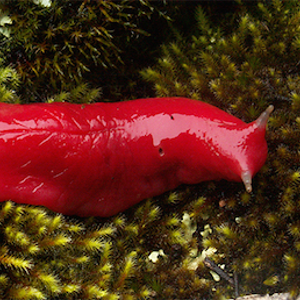
Appearance: The slug looks like a regular slug, save that its skin holds a distinctive reddish hue. It is slimy and can be squished between ones fingers.
Habitat: They live in the Rhakros Jungles. They prefer wet, damp and dark environments. Being blind, they have no need for light, and are actually quite averse to being in the sun.
Lifespan and Development: They can only be born in the adrenal gland of a corpse- any animal or human that has that gland is fair game. The slug, when it finds an adrenal gland, will sit and wait for another slug. They then mate, both partners setting their eggs deep inside the gland. The baby slugs, when they emerge, will eat the adrenal gland first, before moving on to eat the remainder of the body.
Diet: Same as regular slugs- leaves, plants and decomposing matter. An enterprising young torturer, long ago, realized that these slugs prefer to eat the adrenal glands, a taste left over from their early arcs. If the adrenal gland is cut up into small enough pieces, the slugs will eat it instead of attempting to mate and lay eggs in it.
Temperament: It’s a freaking slug. They do sluggy things.
Abilities: The torturer’s experiments were carried on for several generations until someone came upon the current method for preparing Ash. See here for the Ash writeup.
The secret remained largely hidden for many arcs, and to this trial the slug is not well known- the difficulty involved in preparing it correctly combined with its small habitat range means many write it off as an urban legend.
If the slug is fed cut up adrenal glands it will produce a significantly higher quality Ash- doubling the length of the trip, gram for gram, over the non-fed slug.
Spulmokawarta
Created By: Toscun'ahesesi
- Locations: Makubwa Lori, Area surrounding Rhakros
- Height: up to 40 in at shoulder
- Width: up to ~30 inches
- Length: 35 to 71 in
- Weight: 50 - 350 kg (Weight is Common to Rare)
- Native To: West-Central and Southern Idalos
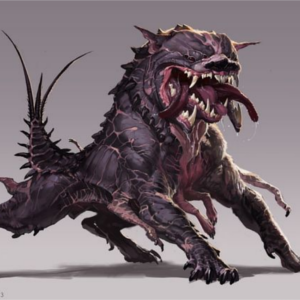
Appearance: The Spulmokawarta is a solid bulky mass of muscle, looking decidedly top heavy with a broad chest and head. Though looking rather like a hairless canine, there are some immediately obvious and rather nightmarish departures from this design. Probably the first noticed are the vestigial legs that dangle uselessly from its body, occasionally scrabbling ineffectually at nothing. The exact number and placement of these varies by creature, but it would be extremely rare for a Spulmokawarta to have none or two have more than four fully functional limbs. Their functional limbs end in broad, sharp claws, often caked in whatever the Spulmokawarta brought down last. When not being used offensively, they are also well suited to digging, and if no suitable cave or burrow is found, the Spulmokawarta will dig its own.
Then you move on to the tough callused, almost armour like skin patches and the bone spurs that cover much of their back, neck and the front of their legs. The bone spurs making taking a bite out of them a fairly painful prospect for competing predators and the thicker skin helps to deflect weaponry or at least cause it to cut a little less deeply.
The tail reminds the more squeamish of a cockroach, and though it lacks any particular function, it does perhaps reflect their tenacity and the difficulty of exterminating them once a pack settles into an area.
The head would be fairly inoffensive, with small eyes and ears and a wide snout if not for the horror show going on in it's mouth. As well as having a bone crushingly strong bite and a mouthful of jagged teeth, the Spulmokawarta also has two lower mandibles on either side. While normally kept flat along it's jaw, when hunting or fighting, if a Spulmokawarta is going to miss landing a solid bite, it will often extend whichever mandible is closest and toss its head in such a way that it rends its opponents regardless. As well as a standard tongue, it has a tentacle-like appendage on either side of its mouth that can extend roughly a foot and is used to grasp and hold onto or pull in prey for a killing bite.
Habitat: Spulmokawarta will live anywhere there is enough prey to support them, though their hairless nature means they cannot tolerate extreme cold. Although their connection to Lisarra has never been proven, it is certainly true they only seem to pop up where she has been active...
Lifespan and Development: Although the Spulmokawarta can live to around 15 arcs, this is unusual as they live violent, brutal lives and rarely die of old age. The grow quickly, reaching physical and sexual maturity in about an arc. That said, they continue to grow throughout their lives, so it is perhaps lucky that most die fairly young. Their gestation period tends to be around six months with litters of 3 to 5 living puppies and several stillborn most common. It is not unusual for the pups to kill each other or be devoured at this stage.
Should they make it through their first few weeks however, they are provided for by their mother. Once they've reached maturity the males will stay with their mother forming a pack while the females are cast out. A female must then go and find another matriarch to challenge for control of the pack and breeding rights. This helps prevent inbreeding, though it has been known to happen. To be fair, genetics are already not on their side so while certainly not good for the species, it doesn't really make things any worse than they already are.
Lone Spulmokawarta encountered then tend to be younger females who have not yet bred. Packs are either a mother and her puppies or a female and her mates. As one might expect with this system, it is the females who tend to be larger and dominant, though sheer attrition and harder life means the males are more numerous.
Diet: Spulmokawarta are strictly carnivorous predators. They will eat anything they are capable of killing. Not only that, but they are one of very few predators who will kill for the sake of killing even when they have no intention of feeding. It is this even more than their monstrous appearance that sets them at odds with the Sev'ryn who firmly believe in taking only what you need and preserving balance.
Temperament: Vicious and unpredictable. Common Sev'ryn opinion is that the Spulmokawarta which is literally a bastardization of monster-dog, was a creature created by Lisarras plague, and as such it is a twisted perversion of what it is meant to be and consequently on the brink of madness as a creature that should not exist.
On occasion, should a Spulmokawarta come upon a person who is out of reach, it might try such canine tricks as wagging it's tail or wiggling about with its belly in the air. Sometimes going as far as to limp and whine as if injured. It will behave as if it is perfectly domesticated and friendly. Right up until the person is within reach, when it will revert to the vicious predator it is.
Abilities: Spulmokawarta have a keen sense of smell and though not the fastest have a high endurance making them accurate and persistent trackers. When they do tangle with something that fights back, the rough skin and bone spurs along its back help deflect weapons, teeth and claws, though it is not impervious, merely tough. Its underbelly is noticeably free of these defences. The two extra tongue like appendages on either side of its mouth are in fact more similar to tentacles and are used to grasp prey and make it easier to either bite down or to gash with the extra mandibles.
It's spit carries all manner of germs, and any bite or wound inflicted by either its mouth or mandibles is almost guaranteed to get infected unless promptly treated by a knowledgeable healer.
Beyond that, other than the fact that it is a fairly canny predator, the Spulmokawarta has no particular abilities.
Uses: None. The meat is widely agreed to be inedible. It is marginally better than starving but has a foul taste and is quite likely to induce vomiting. Although individual bone spurs could be used to craft something it's hide is largely deemed worthless and unworkable.