Western Mounts
Below are the mounts that can be found in various cities around the Western Region. Some of these mounts may be found in other cities; however, Western native mounts may cost more in other locations as they are not as readily available.
Kejradin
left|link= Credit: Alistair

Found In: Ne'haer
Information: The Kejradin, pronounced Kaer-ah-deen, is an apex predator and domesticated mount found within the unmarked lands west of Lysoria. Kaernhad represents the only place in the world to carry a significant population of Kejradin, known as the Kaern Wyvern to those far from the region.
The Kejradin is a domesticated beast known for its incredible sense of smell, mobility, and a unique biological trait that allows them to grow horns, splinters and spikes across its body, flinging these at foes with deadly precision. The creature can indeed fly, and is the chosen mount of the Aelothari Horde due to its general excellence and flexibility in combat. Physically, the Kejradin is considered an exceptionally powerful companion, with thick muscles, high agility and fair strength. Notably, the Kejradin are very familial, and tend to form incredibly large families, often treating their human companions and masters as members of their flock.
Price: 1,500 GN, 2,500 Trained
Lifespan and Development: The Kejradin wyvern are born via egg and kept high in the alpine mountains. After hatching, they require two to three years of life before reaching their maturing years and learning how to fly. After about four to five years of age, they are considered adults in their prime, and remain as such until their twenty fifth year. Remaining venerable from this point on, most Kejradin pass away at the age of thirty to thirty five.
Weight: They weigh, on average, about 1,800 lbs (or 816 kg). Male Kejradin tend to weigh about 10-20% more than female Kejradin, and usually sit at about 2,000 lbs (or 907 kg).
Diet: They are omnivores, though they prefer venison and lamb and are often domesticated by feeding them meats and proteins as developing pups.
Temperament: The Kejradin Wyvern are very protective of their family, and can be incredibly territorial. Unfortunately, most are domesticated by slaughtering their parents before them and their fellow pups (the term for their young) are taken in. Most Kejradin are mounts to the Aelothari Horde, a remaining Clan of Lotharro between Gauthrel and Lysoria.
Abilities: The Kejradin can grow spiked bones rapidly from many parts of their body, similar to the Albion of Gauthrel. They can launch these spikes at incredible precision, known to be capable of ripping through armor and puncturing flesh due to the high velocity and force of the flung shards. Additionally, the Kejradin can unfold (or rather expand) a set of wings from its arms at any time and take flight, making it an amiable mount for land and air. The Kejradin is a muscular, agile and durable creature, an incredible warmount far superior to both the Bruxen and Sohr Khal.
Merquestrians
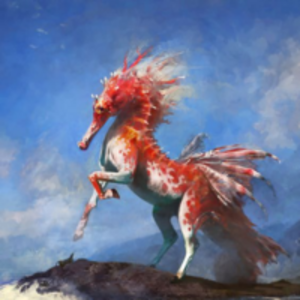
Created By: Incubus
- Location: Scalvoris and Ne'haer
- Native to: Ne'haer
- Price: 300 gn in Ne'haer, 400 gn in Scalvoris, 500 gn outside these location is available
Habitat: The Merquestrians can live on both land and beneath the sea, and tend to prefer coastal areas, tropics, grasslands or underwater areas. They are known to get along well with Mer and Biqaj, and so can be found living among large groups of the underwater peoples, or accompanying the human-like navigators on both land and out in the ocean. Generally however they prefer to live above ground as their physiology makes it different for them to fend off large predators such as sharks.
There are an estimated 6,000 wild Equestors living in the grassy plains and coastline surrounding Ne'haer, with several thousand domesticated by breeding farms and explorers. They are a popular mount for pirates, sailors and even the military, as they can get you from a ship to land in a very short period of time. As a result, there is a large following of them growing outside of Ne'haer and so their habitat is expanding consistently.
Diet: As a strange hybrid of seahorse, actual horse, and lionfish, the Merquestrians have a very diverse diet that can consist of seaweed, grass, general vegetation, plankton and other things that underwater and land-walking herbivores live off of.
Lifespan and Development: The Merquestrians live to about 35 years old, slightly longer than regular horses. They reach full maturity at the age of three and remain at nearly peak condition until death.
Similarly to seahorses, the Merquestrians have their babies carried by the males of the species, eggs laying dormant in a pouch kept in the tail evident on the Merquestrian's backside. During this period they tend to be very passive and evasive of heavy duty or riding. This period is significantly shorter than the horse pregnancy duration of eleven months, generally lasting about four and a half months.
Temperament: Like horses in general, the Merquestrians are docile and tend to avoid conflict. When in the wild, they act much as any wild horses and can be broken in similarly, as well as trained similarly. They are very sensitive and fearful of predators, and will often bolt if they feel their life is in danger. The Equestors are also often known to grow very angry and frustrated at things being shoved forcefully into their cylindrical snout, and are no strangers to kicking veterinarians during procedures.
Abilities: The Merquestrians are about as fast on land as other horses, and can swim exceptionally quickly. Their speed underwater rivals that of dolphins, giving them vast commercial usage as ferries and companions in water sports. They are slightly more durable than other horses, and slightly larger than your average horse as well. They possess no unique ability other than their biological dualism.
- Note: The Merquestrians are very fast water mounts. Travel times on water with them are half that of a boat, though they must stop and rest and will likely do so on the coast. As such, their nautical travel MUST be alongside a coast, and so they cannot do travel between large bodies of water without consistent land stops in-between. This means they are essentially completely unable to travel between oceans.