Southern Fauna
These creatures can be found in the Western region and specifically in the cities of Augiery, Desnind, Niomyr, and Quacia. Unless specified, these animals and monsters can be self moderated.
Contents
Arnabari
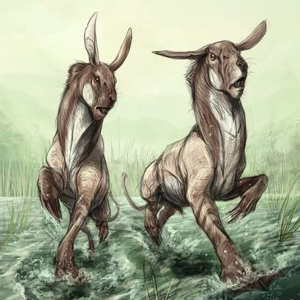
Created By: Toscun'ahesesi
- Location: Makubwa Lori
- Height: 100-130 cm 0r 40-51 inches at shoulder
- Width: ~45 cm or ~18 inches
- Length: ~115 cm or ~45 inches
- Weight: 330-418lbs or 150-190 kg
- Native to: Southern Idalos
Appearance: Although specific colouring as well as coat length and thickness can vary slightly depending on the climate it lives in, Arnabari are always neutral brown or cream colours, with occasional white on their underbellies, they often have darker striping on their legs, as well as a dorsal stripe. They have thick, well muscled bodies with their shoulders being definitively higher than their rumps.
Their feet are tri-clawed with an opposing well developed carpal pad, making them look almost like a cross between typical mammalian pawed and avian feet. There is also a fairly tough webbing between their front three toes making them better paddlers, as well as spreading their weight more evenly on uncertain surfaces such as snow. Their tales are long and hairless, being used mainly for inter species communication of mood and intent.
Their heads rise from thick, powerful yet graceful necks are are fairly lapin-esque. With long, active ears rising from their heads, quick brown eyes and constantly moving noses, they give off an impression of alertness.
Habitat: Arnabari are fairly adaptive, but prefer forested areas. They have been seen on plains or in swamps as well. As long as there is enough vegetation to support them, and not too many predators, the Arnabari might move in and flourish.
Lifespan and Development: Arnabari live on average 20 Arcs, but have on rare occasions been known to live as many as 30. They take roughly 11 seasons to gestate and three is the most common number of offspring. They are mature both physically and sexually at around 2 Arcs. At this point, they will leave to find their own mates.
While not territorial, Arnabari will find and bond with a singular mate. Once this is done, they will consistently stay with this mate. Several bonded pairs might be in the same area at once if it can support them, but are largely uninterested in each other. The only exception to this is their offspring, who will be minded by both parents until they reach maturity. Should one of the pair die, the other will usually refuse to eat, wasting away until death although on rare occasions one may continue to live solitarily.
It is this habit that makes the creature looked upon so favorable by the Sev'ryn, who compare it to their own Dabi Uaya tradition.
Diet: Arnabari are wholly herbivorous. They can survive on a diet of grasses, but prefer young shoots, vegetables, fruits and the like. Many of their favourite plant foods are aquatic, which likely explains the webbing of their feet and their willingness to embrace swampland.
Temperament: Arnabari can be domesticated, and their pair bonding makes them ideal driving creatures. With their solid build, a pair of Arnabari can haul as much as a strong horse. That said, they tend to be extremely stubborn and not particularly affectionate to their 'owners'. They are also prized in some regions because they are more likely to fight to defend their mate than the average horse when faced with a predator.
Abilities: Arnabari have no notable abilities.
Uses:
- Draft animals
- Very rarely as mounts for children or smaller folks
- Food, the meat being gamey but more than palatable and even favoured by some
- Pelt, the fur and leather are nothing special but they are usable
Ditos

Created By: Nymph
- Location: Augiery
- Weight: 1500 pounds
- Height: 5 meters
- Length: 7 meters
- Purpose: Occasionally used as a food source
- Population: The Naerikk suspect there are only 25-30 of these creatures left within the cavern.
Habitat: The ditos live in the underground caverns beneath the Southern Region. They claim large areas of the cavern. Anywhere from 2-4 dito will live in the same territory at any given point. This group consists of the mated pair and their growing offspring. When the offspring are old enough, they will journey through the cavern to establish their own territory and create their own family. Within their territory there are often large "farms" of fungi that the dito ingest.
Lifespan and Development: Mothers tend to give birth to one or two eggs every 50-60 arcs. A female dito will give birth to 2-3 clutches before passing on. Once born, the dito will remain in the egg for a full arc. A young dito will emerge from the egg, hanging around its mother as it grows. It takes approximately 30-40 arcs before the creature will be fully grown. It relies on its parents to provide for most of its life. A grown dito will then leave the nuclear family to make room for the mother's next clutch. It will seek an area within the cavern to call its own. After establishing its territory, the dito will seek out a mate. These beasts mate for life; the loss of their loved one often causes severe depression of the one left behind. It is not uncommon for a dito to pass on due to starvation after losing its mate because they choose not to survive. It is a peculiar trait the Naerikk have noted.
The ditos are blind despite having large black eyes. Having been in darkness for many arcs, the creatures have not found use for sight. Instead, they have long tendrils that waves back and forth in front of their face. These tendrils act like fingers, sensing objects in front of their face. It is suspected that the creature can sense nutritional substances and moisture through these finger-like projections.
Diet: Ditos eat fungus and small plants that cling to the roof of the cavern they preside in. They are mainly fungivores, it is not unheard of for them to suck a bat or two into their mouths during a meal.
Temperament: A dito is a very peaceful creature when not provoked. They simply exist, choosing to occupy with drinking, eating, and sleeping. When provoked, they tend to attempt flight. Fighting is difficult for them as they are large, slow, and do not have physical features to use as weapons. If push comes to shove, they will attempt to smack a creature with their tail to buy themselves time to get away.
Abilities: The fungus that the dito normally feed on are toxic to mortals and most other creatures within the cave. They have a special fermentation process within their hindgut that allows them to destroy the toxins and gain nutrients from the meat of the mushroom. Once enough fungus has been ingested, ditos will produce a pellet in their feces that is edible to mortals. These pellets are soft, spongy, and may be harvested. Known as "dito loaves", this form of food is often seen on Augierian naval ships during extended voyages due to the high calorie content.
Icraphern
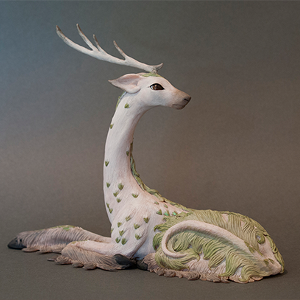
Created By: Avrae Kyric
- Locations: Makubwa Lori, Magani (Captive)
- Pronunciation: Ick-Ra-Fern
- Height: 2 feet
- Length: 3-4 feet
- Weight: ~25 pounds/11.5 kg
- Native to: Southern Idalos
Appearance: Icrapherns greatly resemble the modern day deer, but they're also very different. They're very small, delicate creatures, only growing to about two feet tall at their torso (or three feet if you count their extremely long neck and antler), and being around three to four feel long in length. With four very slender, fragile legs, Icrapherns are often shaky when standing and prefer to be sat down. Therefore, they're not very active creatures except when they have to be, running almost like they're on stilts. Icrapherns have a single white antler in the middle of their head. Their head is fairly small and elegantly pointed, with usually beautiful, dark eyes that range in colors of brown and green. An Icraphern's neck is exceptionally long and tall. The Icraphern's ears are delicate and leaf-shaped, pointed backwards. However, the biggest diferential of an Icraphern from a deer is their pelt. Icrapherns have a base pelt of white, but their fur gets longer and changes color- the tips and long strands are a pale green color. The fur on their skinny legs is also very long and a grayish color. The Icraphern's tail is long, white, and short furred, often curling at the tip.
Temperament: There's no hazard to them. Icrapherns are peaceful creatures, who won't fight or become aggressive. They lean heavily towards fleeing when there's danger, and have no offensive attributes.
Other Information: The Icraphern are a herbivore species, they don't eat meat. They've been said to lay in soft, hidden spots and poke their head up with their long necks through the foliage to observe their surroundings. Icraphern meat is a delicacy, but they're more prized for their incredibly soft pelts. Their shaky, weak bodies make them easy prey, and if it weren't for the Icraphern's keen senses, ability to fit into small hiding spaces, and tendency to breed like that of rabbits, they might be a more rare species because of poaching.
Iyọ
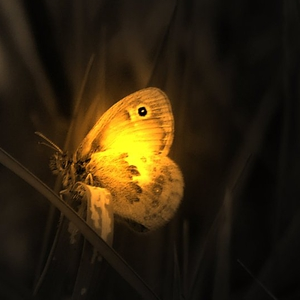
Created By: Nymph
- Locations: Makubwa Lori, Desnind (Captive)
- Height: 1-1.5 feet
- Wingspan: 2-3 feet
- Length: 0.5-1 foot
- Weight: Caterpillar: 2-4 kg/4-8 lbs; Butterfly: 1-2 kg/2-4 lbs
- Native to: Southern Idalos
Appearance: The Iyọ are born as round, translucent, glowing eggs just before the new arc begins (Cylus). They are about the size of a nectarine at this stage, able to fit within the palm of any human hand. The color of the egg’s glow is highly suggestive of the adult Iyọ color. Once the eggs hatch, a fat and fuzzy caterpillar emerges with stripes of the glow color they will carry throughout their life. These “glow bugs” start off small, about the size of an average adult human’s palm. Over the course of the next year, they get progressively bigger until they weight about 4-8 pounds and have a length of approximately 1 foot. At this point, they are mostly fat. They have spent all of their life storing energy for the final transformation, which starts at the beginning of Cylus.

For some reason, all these “glow bugs” form a cocoon starting the 1st Trial of Cylus. The cocoon is thick enough to prevent any light from escaping and all wild caterpillars are very difficult to find at this time. They spend the next 21 to 22 trials within the cocoon. Once they have incubated, cocoon splits to reveal a large butterfly with their wings glowing the color they were born with. Captive butterflies are expected to mate with their lamp mate within a day or two before the release on the Trial 23 of Cylus.
Iyọ have been highly sought after mostly for their glowing nature. They come in three colors: yellow, green, and blue. The larger the caterpillar gets, the more light they emit. This has become extremely beneficial for people using them as lamps as they tend to produce the most light later in an arc.
Habitat: Wild Iyọ commonly live in the forests of the Southern Region. They are native to the Makubwa Lori mostly because they were a result of Lisirra’s plague. The contamination of the forest resulted in a mutation of normal butterflies. This mutation caused the caterpillar stripes and the wings of an adult butterfly to glow. This species was named after the word “lamp” in Xanthea, as Sev’ryn native to Desnind have used these mutated insects to provide light to their city.

Lifespan and Development: Iyọ live for one full arc, being born on the 23rd of Cylus and generally dying at the end of Cylus the following arc. They spend a majority of their life living as caterpillars, eating and growing fat for the final metamorphosis. The cocoon portion of their life lasts 21-22 days, based on gender. Males tend to emerge from the cocoon first and the females follow a day later. The mating process is uneventful, as they produce similar to fish. The eggs are laid by the female and then fertilized by the male.
For the next 24-36 hours, the eggs will move from opaque to translucent before finally glowing the color that they will maintain for the rest of their lives. If an egg remains opaque, it is generally removed as it is unfertilized. Captive Iyọ clutches will be manipulated so eggs of the same glow color are housed in the same glass lamp for the rest of the year. At the end of the year, the Sev'ryn hope that the pair include a male and a female. If there are two males or two females in a lamp, this pair will not produce a clutch. Since there is about 8-10 eggs in a clutch and about 50% are fertilized, there are enough Iyọ to fill lamps that did not have a mated pair.
The eggs hatch by the end of Cylus, around the time the adults die. The young caterpillars will glow from hatching and immediately start feasting on the forage the lamp owner provides. They will grow slowly over the next arc until the cycle starts over again.
Diet: The caterpillars have a voracious appetite for anything green, be it grass or leaves to tough vines or water plants. Anything that lives and grows is food for these small eating machines. They do not need a source of water as the plants they ingest are generally high in water content; however, this means that dried plant material is not a nutritious food source. The adults eat a similar diet of plants, but will also suck nectar from night flowers that bloom during Cylus.
Temperament: These animals are no known to have a temperament. They are known to glowing and eating. Beyond that, they have no real 'personality'.
Abilities:
- Glowing Stripes/Wings - Green, Yellow, or Blue
Uses:
- Lightsource – Various colors
- In a time of need, they have been used as a food source
Nàhb'àífinju

Created By: Toscun'ahesesi
Quick Facts
Height: 15–26 inches at the shoulder
Width: ~10 inches
Length: 35–53 inches rump to chest
Weight: 15.9-34 kg or 35-75 lbs
Native to: Southern Idalos
Locations: Makubwa Lori primarily, other forested areas of Southern Idalos, possibility of introduction to other forested biomes.
Appearance: The Nàhb'àífinju, often shortened to Nafinju, is a decidedly odd looking creature. It's body is best compared to that of the smaller breeds of deer, while it's head and tail are undeniably avian.
It's body is covered in short, incredibly fine and soft fur, coloured an almost iridescent turquoise with darker blackish green striping that helps to break up its profile within the often shady forests it makes its home. It's pelt is prized by all for both colour and texture, and only it's own skittish nature and the awareness of conservation the Sev'ryn show keep it from being over-hunted.
It head is crowned by several feathers similar to those of a peacock, and it's tail (much longer in males than females) is also feathered, though those feathers range from yellow to orange and lack the mobility of a peacocks tail, being used instead like a horses, to whisk away biting insects. In the event of an attack, any significant pressure on the tail will cause it to detach with minimum trauma to the Nafinju, leaving its aggressor with a still twitching tail to hopefully distract them. Though it will grow back, this does take time, about 6 seasons to reach full length again. Although largely avian, it's head does boast two tufted ears which are in almost constant motion. Sev'ryn consider the head-feathers to be lucky, and they are hotly traded for when a Nafinju is brought down.
Aside from tail length, there is no major sexual dimorphism, though males do tend to be slightly larger than the females.
Habitat: Nafinju are found solely in temperate forests. While hardier than they appear, they are nevertheless too delicate for extreme temperatures, and do not deal well with drought. Thick underbrush they can use for shelter while sleeping is preferable.
Lifespan and Development: Nafinju can live up to 17 Arcs, although in the wild 10 is more common. Gestation lasts roughly 7 months, at which point a live offspring is delivered, rarely twins may occur. More than two offspring at once is unheard of. The young will stay with their mother until able to fend for themselves at roughly 6 months. Sexual maturity is reached between 1 and 2 Arcs with females maturing more slowly than the males.
Nafinju are largely solitary creatures. A males territory tends to be larger and may include several females and rarely other males as long as they have not yet reached sexual maturity. They only actively seek out others for mating, with the male leaving once it is clear the female has been impregnated. The females have no specific season when they are fertile.
Diet: Nafinju graze constantly. As well as many plants, they will eat fruits and vegetables when available as well as fish and insects. Rarely they will eat rodents, but these seem to largely be only when the opportunity arises rather then as a practiced survival method. Berries of all sorts are a particular favourite. The Nafinju is surprisingly adept at picking small things, be they specific plant sprouts, berries or insects with its large beak.
Temperament: Nafinju are extremely skittish. They are on high alert almost constantly, and will run at the first sign of danger. Rarely during mating a male will become more aggressive, tending to use its beak for attack more than its hooves. This is because occasionally a male will have to drive off another male.
They are singularly unsuited to domestication. It is possible to confine them for their exotic appearance, but no true domestication has been successful. Given the chance they will always flee and avoid contact.
Abilities: Nafinju have fairly keen senses of hearing and vision, and for their size are fairly swift as one might expect of a creature with a large many predators and no major defence mechanism.
Uses: Primarily hunted for their pelts, the meat of the Nafinju is edible, the feathers are prized by Sev'ryn, and the beaks are often worked into ladles or other such tools.
Snäytu Kanna
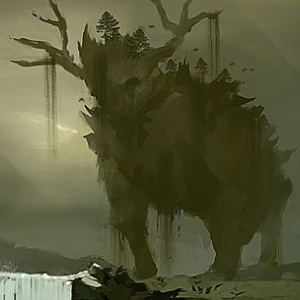
Created By: Leeson Andaris and Nir'wei
- Locations: Southern Idalos, in the lands between Desnind, Quacia and Niomyr; Historical and rare sightings of them in parts of Central and Western Idalos
- Height: ~70 ft Average, ~90 ft for males (including antlers)
- Width: ~20 ft
- Length: ~50 ft
- Weight: Varies between 50k and 70k lbs
- Native to: Edges of forests around Desnind
- Rarity: Extremely Rare; One herd known to date
MODERATOR APPROVAL NEEDED.
Appearance: Snäytu Kanna (sNay-eetOO kAHn-nAH) are the largest sentient land creatures in Idalos. These behemoths stride across land on four massive hooves, the walls of which stand at least as tall as two men, are often caked with massive amounts of hardened mud, stone, and clay depending on their terrain. Stemming from their hooves extends four massive legs that bend inwardly with one joint each. Its flesh, like the rest of its body save its hooves, antlers, and teeth, is composed of what appears to be hardened bark, much like that of a great tree's. The creature’s legs extends for an average of fifty feet before reaching the apex of the creature's back, where, in the place of bark, a peculiarly soft moss grows. From this moss, the creature gains its nutrients in the form of evolved, perpetual photosynthesis, which makes the beast's blood and moss seem to glow with radiant sun-kissed brilliance, giving the Snäytu Kanna a majestic appearance.
From its back grows a neck, covered and thoroughly plated with bark, and is of appropriate size to allow the gentle giant to accurately survey its surroundings. In males, their eyes are large and magnificently bright with the light of the dual suns. In females, their eyes are split into countless amounts of brightly-colored slits that adorn the upper-middle portion of their heads, in order to better watch for potential threats. These eyes are without pupils, the entirety of their eye being light sensitive rather to a small portion. It is has been thought that the ocular organs of a Snäytu Kanna send out rays of light and view their world through a kind of visible radar rather to having their organs be light sensitive, making the Snäytu Kanna somewhat blind. It seems, instead, that they sense changes in air movement based on the way the moss and parasitic plants that grow from them shift in their flesh. As such, the Snäytu Kanna does not often open its eyes, and when it does, the individual in its gaze could be either mystified by the beast and its eyes of light or literally blinded by its brightness.
In males, two gigantic tree-like structures protrude from its skull in a fashion that somewhat resembles antlers. These antlers are adorned with a thick brush of leaf-like structures that capture and harness the power of sunlight with great efficiency. This extra bit of potential energy is unnecessary for everyday activities, but upon command the creature can utilize a great push of vitality that could be necessary for fleeing, rushing, combat, or mating. Females, while lacking these antlers, have somewhat longer backs and torsos, allowing for more moss to grow and more energy, as well as a large womb for her young, effectively making Snäytu Kanna pregnancies much less obvious and much less cumbersome for the rest of the herd.
The Snäytu Kanna, due partly for their size and partly for their perfect living conditions, serve as roaming homes for the creatures of their given area. Birds will perch upon their antlers, small trees and plants will occasionally grow from their soft backs which attracts squirrels, rabbits, and other small mammals. The ground is soft and fertile, and though they cannot support many beings, Snäytu Kanna support what can easily be described as a small ecosystem, diverse to every individual. They serve as a way to naturally spread foreign species into new habitats in life, and in death their corpses fall and hollow quickly, leaving their strong bark skin to be carved and utilized by larger organisms such as deer, bears, or trees. They are often considered the personifications of nature and hailed with distant respect and gratitude by nearby civilizations.
Habitat: Snäytu Kanna can be found across Southern Idalos, in the lands between Desnind, Quacia and Niomyr, however there have been rare sightings of them in parts of Central and Western Idalos as well, as they are known to prefer roaming over grasslands, forests and light mountainous regions. They shun Eastern territories because of the desert, and Northern territories seeing as cold temperatures can limit their mobility and temperature.
Rarely would you see a Snäytu Kanna traversing through bodies of water, but due to their migratory nature it is entirely possible, and has happened before. Snäytu Kanna were created in the forests surrounding Desnind, and yet they can be found even a continent away in similar habitats. Therefor, it had to have been possible for the Snäytu Kanna to migrate over a body of water, and even somewhat recently due to the fact that Southern and Eastern Snäytu Kanna do not differ biologically, which means it is certainly possible for whatever factor that forced the beasts to move across an ocean may act again and the Snäytu Kanna could move and adapt to different environments somewhat quickly.
Lifespan and Development: Usually during the season of Saun, when the Snäytu Kanna are the strongest, the male Snäytu Kanna exhales pollen directly into a female’s mouth which starts to fertilize and develop inside her, until such a time when the developed offspring break the bark around them from inside their mother and crawl out of their wombs. They’re placed in a sunny spot nearby by the father or other herd members and the new father makes a nest of their given area until such a time where the new mother recovers from her wounds and the litter of children are large enough to roam. In order to protect their young and weak, many Snäytu Kanna adopt a herd mentality, travelling in groups with extra protection given to pregnant and vulnerable females.
Snäytu Kanna typically live to the age of 110 arcs and become sexually mature at 50 arcs old. From there, a suitable mate is found within an individual’s own or neighboring herd. Snäytu Kanna mate for life, meaning that once impregnated, the female Snäytu Kanna is bound to the male Snäytu Kanna and vice versa for the rest of their existence.
Herds are either added onto by reproducing within the same family, or begun anew by mating between herds. Herds often reach their limit at a minimum of ten members and at a maximum of fifteen members, and the numbers grow quickly with every new litter.
Litters of Snäytu Kanna usually include 6-7 newborns, and about four typically survive. Most die of malnutrition due to being smaller than their brothers, sisters, and adult families, or, tragically, poaching as a big game trophy.
History: It is often thought that the Immortals Moseke and Xiur collaborated to create a creature that embodied both the balance and neutral benevolence of nature and hope for its continuation of being. Legends state that Moseke crafted the beast’s skeleton and body from the earth and forest life, and Xiur planted hope in their hearts and in their eyes, making both shine with the brilliance of the stars.
Quickly, they were discovered by Sev’ryn peoples near and around the city of Desnind, who, with their strong ties to nature, began to hold the new behemoths in great respect and reverence. They gave the beasts the name Snäytu Kanna, meaning Walking Earth, and held them as divine creations of Moseke. As such, they have always done their best to keep a respectful distance from their herds and families, letting them ensure the balance of nature quietly and properly.
There are legends of the occasional emotional bonding between man and Snäytu Kanna, forming a unique relationship. Both the Snäytu Kanna and the human would abandon their families and homes in favor of a nomadic life dedicated to the continuation of natural balance and order. These individuals in the legends are more often than not blessed by Moseke and already have formed a deep relationship with nature before bonding with the behemoth, and are usually of Sev’ryn descent.
With the spread of civilization, the Snäytu Kanna’s numbers grow less and less dense. Philosophers have argued that they are a symbol of the state of nature, or perhaps a sign from Moseke to not consume the entirety of her domain. Either way, the Snäytu Kanna continue, and hopefully will continue, to roam Idalos in quiet and determined hope for the wilderness and its upkeep. Their herds travel only in the deep forests, often avoiding cities and civilizations if they can. Occasionally, if the need is great, a Snäytu Kanna will stride near a city and amaze its inhabitants, towering over their buildings and shadowing even the greatest of leaders.
Diet: The Snäytu Kanna feed consistently off of the rays of the dual suns of Idalos via a potent form of photosynthesis through either specialized moss-like structures on their backs or thick brush on the males’ antlers.
Temperament: Snäytu Kanna are docile and notoriously well mannered towards most other creatures at most other times during the annual cycle. However, during the Ymiden and Saun portion of the arc, males get increasingly territorial and temperamental towards rivalling males. Though still relatively uncommon, it is more likely for one to hear the pained screams of an injured male that has been wounded by combat over a potential mate, or see a somewhat horrific battle between two of the giants.
Other than over mating, there is only one other time where the disposition of a Snäytu Kanna is greatly altered, and that is during a time of mourning.
During the loss of a herd member or child, which can potentially happen annually but is most common in Saun, the herd, for a short time, becomes much more reclusive and solemn than normal. Though quiet and somber funerals are the most common, on occasion the forests will echo with the pained song of a mother mourning her child, often likened to the wind if it could moan with the ferocity of forlorn thunder.
Abilities: Snäytu Kanna have a wide range of peculiar abilities compared to the rest of the local fauna. This includes their size, their fortified bark-like skin, their lack of a need to relieve themselves of waste or replenish food supplies or water. But arguably, their most but arguably their most impressive ability is their ability to hibernate throughout Zi’ida and Cylus, while perfectly blending into their natural surroundings to any but the most skilled of observers. Through careful rationing throughout the rest of the arc, the Snäytu Kanna can easily survive in even the harshest of colds until such a time where the weather is bearable enough to awaken.
As well as this, there have been legends of communication with the Snäytu Kanna through many arcs of meditation and attention to an individual creature. These legends detail a dedicated individual who has bonded with a Snäytu Kanna over many many arcs, and, after speaking to the Snäytu Kanna absently over those arcs, one day heard the Snäytu Kanna speak back in common tongue. The fact that Snäytu Kanna are intelligent creatures has never once been argued, but whether or not the legend speaks some amount of truth has yet to be seen.
Spulmokawarta
Created By: Toscun'ahesesi
- Locations: Makubwa Lori, Area surrounding Rhakros
- Height: up to 40 in at shoulder
- Width: up to ~30 inches
- Length: 35 to 71 in
- Weight: 50 - 350 kg (Weight is Common to Rare)
- Native To: West-Central and Southern Idalos
MODERATOR APPROVAL NEEDED FOR HEAVY WEIGHTS.
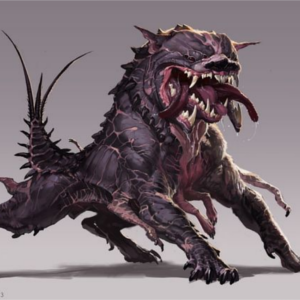
Appearance: The Spulmokawarta is a solid bulky mass of muscle, looking decidedly top heavy with a broad chest and head. Though looking rather like a hairless canine, there are some immediately obvious and rather nightmarish departures from this design. Probably the first noticed are the vestigial legs that dangle uselessly from its body, occasionally scrabbling ineffectually at nothing. The exact number and placement of these varies by creature, but it would be extremely rare for a Spulmokawarta to have none or two have more than four fully functional limbs. Their functional limbs end in broad, sharp claws, often caked in whatever the Spulmokawarta brought down last. When not being used offensively, they are also well suited to digging, and if no suitable cave or burrow is found, the Spulmokawarta will dig its own.
Then you move on to the tough callused, almost armour like skin patches and the bone spurs that cover much of their back, neck and the front of their legs. The bone spurs making taking a bite out of them a fairly painful prospect for competing predators and the thicker skin helps to deflect weaponry or at least cause it to cut a little less deeply.
The tail reminds the more squeamish of a cockroach, and though it lacks any particular function, it does perhaps reflect their tenacity and the difficulty of exterminating them once a pack settles into an area.
The head would be fairly inoffensive, with small eyes and ears and a wide snout if not for the horror show going on in it's mouth. As well as having a bone crushingly strong bite and a mouthful of jagged teeth, the Spulmokawarta also has two lower mandibles on either side. While normally kept flat along it's jaw, when hunting or fighting, if a Spulmokawarta is going to miss landing a solid bite, it will often extend whichever mandible is closest and toss its head in such a way that it rends its opponents regardless. As well as a standard tongue, it has a tentacle-like appendage on either side of its mouth that can extend roughly a foot and is used to grasp and hold onto or pull in prey for a killing bite.
Habitat: Spulmokawarta will live anywhere there is enough prey to support them, though their hairless nature means they cannot tolerate extreme cold. Although their connection to Lisarra has never been proven, it is certainly true they only seem to pop up where she has been active...
Lifespan and Development: Although the Spulmokawarta can live to around 15 arcs, this is unusual as they live violent, brutal lives and rarely die of old age. The grow quickly, reaching physical and sexual maturity in about an arc. That said, they continue to grow throughout their lives, so it is perhaps lucky that most die fairly young. Their gestation period tends to be around six months with litters of 3 to 5 living puppies and several stillborn most common. It is not unusual for the pups to kill each other or be devoured at this stage.
Should they make it through their first few weeks however, they are provided for by their mother. Once they've reached maturity the males will stay with their mother forming a pack while the females are cast out. A female must then go and find another matriarch to challenge for control of the pack and breeding rights. This helps prevent inbreeding, though it has been known to happen. To be fair, genetics are already not on their side so while certainly not good for the species, it doesn't really make things any worse than they already are.
Lone Spulmokawarta encountered then tend to be younger females who have not yet bred. Packs are either a mother and her puppies or a female and her mates. As one might expect with this system, it is the females who tend to be larger and dominant, though sheer attrition and harder life means the males are more numerous.
Diet: Spulmokawarta are strictly carnivorous predators. They will eat anything they are capable of killing. Not only that, but they are one of very few predators who will kill for the sake of killing even when they have no intention of feeding. It is this even more than their monstrous appearance that sets them at odds with the Sev'ryn who firmly believe in taking only what you need and preserving balance.
Temperament: Vicious and unpredictable. Common Sev'ryn opinion is that the Spulmokawarta which is literally a bastardization of monster-dog, was a creature created by Lisarras plague, and as such it is a twisted perversion of what it is meant to be and consequently on the brink of madness as a creature that should not exist.
On occasion, should a Spulmokawarta come upon a person who is out of reach, it might try such canine tricks as wagging it's tail or wiggling about with its belly in the air. Sometimes going as far as to limp and whine as if injured. It will behave as if it is perfectly domesticated and friendly. Right up until the person is within reach, when it will revert to the vicious predator it is.
Abilities: Spulmokawarta have a keen sense of smell and though not the fastest have a high endurance making them accurate and persistent trackers. When they do tangle with something that fights back, the rough skin and bone spurs along its back help deflect weapons, teeth and claws, though it is not impervious, merely tough. Its underbelly is noticeably free of these defences. The two extra tongue like appendages on either side of its mouth are in fact more similar to tentacles and are used to grasp prey and make it easier to either bite down or to gash with the extra mandibles.
It's spit carries all manner of germs, and any bite or wound inflicted by either its mouth or mandibles is almost guaranteed to get infected unless promptly treated by a knowledgeable healer.
Beyond that, other than the fact that it is a fairly canny predator, the Spulmokawarta has no particular abilities.
Uses: None. The meat is widely agreed to be inedible. It is marginally better than starving but has a foul taste and is quite likely to induce vomiting. Although individual bone spurs could be used to craft something it's hide is largely deemed worthless and unworkable.
Uwär Bysez

Created By: Ti'niva
- Location: Makubwa Lori
- Height to Head: 160-200 cm (Male); 120-140 cm (Female)
- Width (shoulder to shoulder): 90-160 cm (Male); 80-100 cm (Female)
- Length (nose to base of tail): 300-410 cm (male); 300-380 cm (Female)
- Weight: > 2 tonnes (Male); > 1.8 tonnes (Female)
Details: Their name in common is literally translated to "snake beast." These creatures are native to the Makubwa Lori and have a small population the creatures are solitary and very territorial. They tend to come in shades of green and brown as well as the rare blue. The creatures have thick skin which is incredibly difficult to pierce and, therefore, difficult to hunt and kill. Due to the rarity of their useful parts (teeth, skin, claws and poison) there are no set prices and costs are up to the individual retailer. These creatures are incredibly dangerous and many will keep as far away from them as possible. The only real reasons these creatures would be hunted would for city security or if somebody required the specific items and could afford to supply a hunting party.
Lifespan and Development: The Uwär Bysez can live up to approximately 140 arcs. The creature reaches maturity at 40 arcs. At around 20 arcs the creature will have also gained the ability to spit poison and by 30 arcs the creature's claws excrete poison.
Diet: The Uwär Bysez is omnivorous. It will eat plants when necessary but it prefers to eat meat. The creature will attack and hunt nearly all other creatures with few being bigger than it in the forest. They are highly territorial and may occasionally kill without the intent to eat if their den is threatened. Although they are of basic sentience, they are highly aware their skin is impenetrable to many weapons, which can make them extremely dangerous.
Temperament: The Uwär Bysez are aggressive and territorial. They each have an area in the forest that they consider theirs. Many of them will make sure not to invade another Uwär Bysez's territory as a battle between two of these creatures is often fatal for both participants.
Abilities:
- Poison bite: The bite of the Uwär Bysez is incredibly dangerous to anyone who experiences it. The poison that is produced is a neurotoxin which acts quickly to numb the entire area of the bite. It spreads quickly and if not treated the neurotoxin will eventually cause a shutdown the body. This complete shutdown can take a few trials as it varies based on size of the offending beast. If not treated, the victim is guaranteed to die.
- Poison spit: The creature can spit poison at its prey or attacker and cause blindness if it goes in the eyes. The effects of the poison act differently in comparison to injection into the bloodstream and will not result in complete nervous system failure.
- Poison claws: The effects of this are directly the same as that of the poison bite except there is an 8% chance that the poison will not make its way into the bloodstream.
Weaknesses: The Uwär Bysez are weaker in the cold seasons. They hibernate during the last 33 trials of Zi'da and throughout Cylus and early Ashan. During this time they can be easily ambushed. Heated weapons (meaning they are glowing from the heat) have a higher chance of piercing their thick skin.