Worldly Fauna
All creatures and monsters located within this section can be found in 3 or more regions throughout Idalos. Regional specific beasts can be found in the specific regions fauna pages.
Contents
Fogan

Quick Facts:
Alias: Aelig’s Nefarious Newts.
Life span: 30 Arcs
Size: Body is 6 to 7 inches in length
Habitat: Found near fresh water lakes and streams.
Appearance: For the most part Fogan resemble Newts and Salamanders. What sets them apart is the small set of glowing eyes that fit in the middle of their forehead and the many additional limbs in a style reminiscent of a centipede. Their skin ranges greatly in colour and design. The brighter the colour, the more toxic the skin; though this rule isn't always followed. A Fogan’s eyes come in a vast array of colours that never seem to synch up. If one is blue another might be a darker or lighter version of it but no two will be the same hue.
Abilities: Their strange eyes aren’t just for show. If anyone makes eye contact, for even a moment, with the glowing eyes of a Fogan, they start to see very lifelike Illusions derived from the victim's own imagination. The creature has very little control of the outcome, but it usually doesn’t end well for the victim. Under the influence of a Fogan's gaze, friends can become monsters and monsters can become small children in need of assistance. The illusions usually last for about 10 bits, but a person with eBold textxcellent skills in meditation can recover quickly than most. A trick commonly used by people familiar with Fogan to counter it's illusions is to use some kind of reflection to spot the creatures location. Since a Fogan's magic gaze doesn't reflect, this trick works wonders in avoiding the creatures trap.
While they may not be able to communicate with other races, they have proven to be more intelligent and clever than one might expect. It isn’t uncommon for them to utilize primitive tactics, like ambushes and distractions. If one were to cut open the head of one of these creatures, they would see that Fogan actually have two intertwined brains that work together in harmony and help keep it sharper then most creatures of a similar size.
Behaviour: Fogan usually enjoy playing tricks on those that dare enter their territory but there are a few stories of them helping travellers. It's believed that the distinction they make is based on how well a person respects nature, but it seems this is most likely an urban legend.
They tend to be solitary creatures, except during mating season, which occurs sometime in early spring. During this time they are known to make haunting wails and screams that sound distinctly humanoid in order to attract a mate. If someone is nimble enough to get one in their grasp it will hiss like a feline or scream like a young child.
They are nocturnal creatures and typically hide in the mud during the day. Their glowing eyes attract insects, which make up the bulk of the Fogan's diet.
Life Cycle: When Ymiden begins, they start their mating calls during the night to attract their ideal mate. The breeding process begins by having the male mount the female; and when they are successful the female deposits her eggs into the closest river. Out of a batch of anywhere from 20 to 100 tiny eggs, only a handful of the imbalanced abominations will be lucky enough survive exposure to the elements and continue to the next stage. After a week the Fogan eggs hatch into tadpoles that look fairly typical. After about a season, they slowly develop into full grown Fogan and their odd characteristics become known. They seem to stop aging after reaching maturity, until they suddenly fade out of existence as if they were never there. Oddly enough, if they are killed before they reach their expiry date, their bodies remain to be used in the creation of poisons, drugs and more creative uses.
Hibernation begins in late Vhalar where Fogan slowly start to fade until they can no longer be seen, They only appear again when the cold weather dissipates. No one is really sure why they go to in the cold months but they are never seen or heard from during this time.
History: Fogan are believed to be creations of the God of illusions and chaos, Aelig, who for whatever reason abandoned them in the wilds, from which they spread forth like a plague to various regions of the world. Some dismiss them as abandoned mistakes, but most would agree that they were made intentionally to spread as much discord as possible. Whatever the reason, they don’t seem to be going anywhere.
Practical Uses: Skilled poison crafters are known to use the blood of the Fogan to give their victims varying degrees of hallucinations based on it’s potency. The blood of a Fogan glows brightly so it usually needs to be mixed with something to hide it’s true nature. Usually something with an overpowering colour or thick consistency will do the trick. Only competent poison crafters can properly draw the creatures blood, and dilute it enough to hide its true nature while also keeping the desired outcome intact.
While not potent enough to kill humans, the poison that secretes from certain variations of Fogan is enough to make humans feel an exhilarating high. From just a single lick, an intense feeling of Euphoria can be felt instantly and intensely for anywhere between one and four breaks. To prepare the Fogan for use, one ether needs to give the poor creature a sedative or beat it to an inch of its life. This practice is illegal for its cruelty and for how unpredictable it can make people on it.
Credit: Lapis
Glowbug
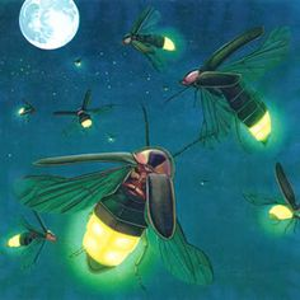
Quick Facts: Small. Emit Light. Live Underground.
Height: 0.4 inches.
Width: 0.4 inches.
Length: 1 inch.
Weight: About 20 grams.
Native to: Underground cave systems.
Locations: All regions except for Oscillus.
Appearance:
The average Glowbug appears very much like a firefly in their appearance. They have six small jointed legs attached at the thorax. The joints along the legs allow for increased mobility during ground movement. The abdomen of the Glowbug is mostly covered by two pairs of wings. These wings are kept under a light wing cover which is shifted to the side of the bug whenever flight is about to occur. It is useful for ensuring that no hazardous materials, or excessive grime find themselves attached to the sensitive wings of the creature as such a thing would prevent it from flying. A set of four antenna are found upon their heads. The first pair of antenna are used for traditional sensing of the environment as is found in most common insects, however the second pair is focused more on determining the age of light markers, and is thus very sensitive to chemicals which cause bioluminescence. The general color scheme of the Glowbug is mostly gray, but it has a shifting texture to it in an attempt at throwing off predators which might believe them to be part of their underground habitat. The only part of the Glowbug not following this color scheme is a bright tail at the end of the creature. The tail is slightly segmented away from the remainder of the abdomen, and can be released at any point on command by the bug. Sexual dimorphism occurs in the creature as males tend to emit a bright orange light, and females emit a calmer green glow. This feature is what gives the bug it's name.
Habitat: The Glowbug is typically found in underground caverns, or cave systems, and very rarely leaves these. It prefers the constant temperature of around 50-55 degrees Fahreinheit which is provided by living subsurface. It tends to live near sources of ground water, and typically hangs from stalagtites near these watering areas. They do not dislike bright lights as some creatures living underground might, but typically do not swarm around them as many surface bugs do, and instead prefer the general darkness interspersed with points of light. They have managed to spread to all continental areas minus Oscillus, and can usually be found in the deeper parts of caves.
Lifespan and Development: Glowbugs are hatched from eggs located within the indents created by broken stalagtites. After being hatched, the worm-like larvae attach themselves to the wall of the indent using a sticky saliva. They consume whatever remains of their eggs slowly, and convert part of their meal into more saliva to keep themselves hanging. After a week and a half, the larvae develop a collective cocoon around themselves, and pupate for another week. Any larvae that die within the cocoon tend to be consumed by their relatives, and help to prolong their lifespan. At the end of the week, the larvae emerge, having grown wings, and other features common in Glowbugs. They do not immediately possess the ability to glow, and must rely on the marking of other older Glowbugs for around two weeks before they begin to glow themselves. Once the ability to glow is gained, the Glowbugs have reached sexual maturity. About once a month, the Glowbug will feel the urge to mate. Females will locate a broken stalagtite indentation, or another suitable hole in the ceiling, and emit a soft green glow. Males will be attracted to these holes, and will begin the reproductive process. Once a male has mated with a female, it will release it's own glow within the hole to ward off any competitors. The female will release the fertilized eggs within the indent, and will then return to it's normal habits, leaving the process to repeat for the next generation. Glowbugs have a lifespan of about four months, though exceptionally healthy ones have managed to make it to five months.
Diet: Glowbugs are carnivorous scavengers. They may occasionally feed upon slugs, or snails that find themselves within the caves, but their main source of food actually consists of creatures many times their size. When a suitably large creature passes near them, the Glowbug will release their glowing tail onto the creature. The tail will attach to the animal, and provide a glowing marker for it's location. The Glowbug will then follow the marker. The marker allows for the animal to be better seen, and may either reduce it's ability to catch prey, in which case it will starve, or allow for larger predators to more easily locate it, and kill it. The Glowbug will then wait for the predator to finish feasting upon the dead animal, and will then consume whatever remains of it in a great feast. The tail will eventually regrow itself after a couple of days, and allow for the process to repeat. The Glowbug must eat once every two days, and will consume around ten grams of meat upon each feeding. Females intending to mate will consume fifteen grams of meat to counteract the loss of nutrients inherent in laying eggs.
Temperament: Glowbugs are somewhat territorial with one another in regards to the stalagtites where their reproduction occurs, but are otherwise very communal creatures, and work well with one another to mark prey. They do not mind the presence of sentient beings as they are unused to their presence, and are generally left alone, but will very quickly scatter at the sign of another cave creature as some tend to prey upon the Glowbugs. Their method of hunting means that they will sometimes tag sentient lifeforms that enter.
Abilities: Excellent vision in terms of distinguishing light from dark. Any semblance of light within the dark space will be noticed by the Glowbug. They can also determine how long any bioluminescent material has been active, and can sometimes identify where it was created, or by which animal. Ability to glow in the dark, and to tag other animals with an easily detachable tail. The tail also regrows after two days.
Credit: Noth
Horned Carowa
Credit: Nightshade Eld
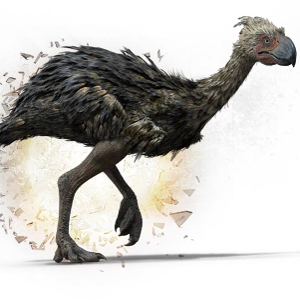
Quick Facts: The Horned Carowa is one of the largest bird species and is often considered one of the most dangerous. An aggressive nature that can become even more so when attacked, and combined with their large and dangerous legs and horns makes them both pests and menaces to those who have to live nearby. They are a common cause of death for the unprepared traveler when in Central or West Idalos and their Northern variant is even more vicious. The only benefit for humanoids is the fact that their meat is incredibly rich in nutrients and they lack tough muscle in their upper body. There is no size difference between the North and the West/Central variant. Horned Carowa are completely flightless. The core of their horns can be ground into an "Alchemical Primer".
Height: They range from 10 to 20 feet, though usually most don't get bigger than 12. It is rare for the birds to reach full size in nature, and often a Carowa of that size is killed as quickly as possible to reduce menace to travelers and towns in its area.
Width: The Carowa has a body width of about 3-5 feet across, depending on its height. It's wing span is a different matter entirely, often being equal to or larger than the height of the bird itself.
Weight: Anywhere from 3,000 to 6,000 lbs
Native to: Open plains areas though it has been known to adapt to more forested areas.
Locations: Central, West, and remote parts of North Idalos.
Appearance: The Horned Carowa comes in two different appearances. Central and Western Carowa are known to have long, muscle-covered legs which lead up to a large and rather plump body. The best thing to compare them to is a cassowary. Their upper bodies are usually covered in soft, exotic looking plumage that comes in a variety of colours. Both genders flaunt vivid colors to attract each other. The males are known to have much stronger horns protruding from the top of their head, while the females have smaller horns on the top of their beaks. The legs of the female are more powerful. They're the ones in charge of digging up the nest, and are often left in charge of protecting the nest while the male goes out to hunt. Their stronger legs give them the ability to better protect chicks.The males are the hunters and foragers, likely the evolutionary cause of the large horns.
Northern Carowa, however, usually come in colors more camouflaged to their environment. It isn’t to protect them from predators as much as it is to hide them from prey. They are vicious and savage creatures who have adapted to the more dangerous parts of the world. As such they are far more muscular on the upper half, their feathers are more brittle, and are far more violent.
The reason for color differentiation between the two variants is rather simple. When they were imported out of the mountains, there were several breeders who strove to create the most beautiful birds, seeking to create the newest exotic pet. Needless to say their attempts failed, but the coloured birds escaped. Several generations later, the brightly coloured animals had replaced their duller, northern compatriots.
Habitat: Originally the Horned Carowa were only native to Northern Idalos. They were unappetizing, but considered to be one of the better food sources due to the high nutrition content. Someone came up with the idea to try to breed them in Central Idalos to be more docile and better tasting. That idea didn’t work and several escaped animals led to an explosion of their population. Without the harsher conditions the birds were used to they were able to thrive very quickly and cause chaos in the area. They are easily adaptable, unchecked they can cause a lot of problems. Those of the West and Central however are much weaker meaning they're easier to deal with. Their position as apex predator in nearly every place they're found means that the only threats come from two sources: their natural enemies, the Zelroux, and hunting parties.
The Carowa was confined to the Northern parts mainly due to the fact that the Zelroux lived primarily in West and Central Idalos. The other reason has to do with their population. The Carowa is a terrible parent during the egg stage- they care little for the eggs and if too much attention is required to protect them, the parents will often eat the eggs rather than spend the time to keep them safe. This rare survival rate of eggs keeps the population in low numbers. If the Carowa moved too far away from each other it would be impossible for young Carowa to find mates during the proper season.
A Carowa will try to remain close to where it hatched often going so far as to drive its parents out once it's strong enough. The territory of a Carowa can vary anywhere from 200-1000 acres depending on just how strong the Carowa is. Males tend to have larger territory while the females have more resource rich territory.
Lifespan and Development: Typically a Carowa will be born in a small nest of 3-5 eggs, usually a shallow hole with a bedding of leaves and grasses. At most, one of those eggs will survive. Carowa tend to have little time or energy for their young until after they have hatched. Female Carowas dig holes in the ground that function as nests. The female Carowa will remain in the area and cover the nest with leaves during the day time. If she leaves to hunt the father may remain in the area, though it's unlikely. At night the female Carowa will sit on the nest, however that is the extent of the attention the eggs recieve. Parents will rear their one child that hatches with great care and patience. The child will be fiercely protected by both parents at this point, however that is not to say that it will be coddled.The baby Carowa will be taught how to hunt and fight until the age of 2 years old when it is officially mature.
Territory is usually stolen from an older Carowa by a younger Carowa. The Carowa are a ruthless species that focus on little more than survival, and have no bonds to other Carowa. As such Carowa will often fight with each other over territory, the old giving way to the young. At the age of 2 a Carowa usually forces its parents out of their territory. When a Carowa reaches 3 years of age they will be old enough to breed. When mating season comes, all mature Carowa gravitate towards each other. They vie for attention by stomping the ground to make large vibrations and emit ear shattering screams. Once they've gathered they choose a mate (males often fighting over females for both variants) and the mates choose one territory to go to, often the female's.
The main predator of the Horned Carowa is a creature known as the Wild Zelroux. They will avoid areas where they find signs of a Wild Zelroux, or if they cannot avoid it, will clump up in even-numbered bunches. They avoid odd number groups for an unknown reason.
Diet: Carowa tend to eat anything smaller than themselves. This often includes animals, plants, and sentient species of all kinds.
When hunting, the Carowa of the West and Central areas tend to throw any idea of stealth out the window due to their flamboyant coloration. Once they've located their prey they will chase them down in a manner best compared to a cheetah, relying on speed and endurance. They mainly attack by jumping and kicking with their powerful legs, though males are just as likely to head butt an enemy. The males use their horns to both attack foes and prey, impaling anything they can on them.
In the North, however Carowas tend to spend a lot more time stalking their prey, mainly due to their superior camouflage. It's hard to stay silent in areas like thick forests, but the North Carowa is known to patiently sit and wait for prey. Once their unsuspecting meal has gotten close, they'll emerge from their hiding place as suddenly and quickly as possible, relying on surprise. They aren't particularly fast, but they have a lot of endurance and will follow prey for miles.
They need to eat a good amount because they exert a lot of energy catching prey and fighting, but due to their ability to eat nearly anything, it is rare for one to starve to death. Because each Carowa has a very large territory, they don't tend to cause as much damage to the ecosystem as one would expect. They kill a large animal about once every week and the rest of time is spent foraging for whatever they can dig up between kills.
Temperament: The Carowa are extremely vicious creatures, known for their territorial aggressiveness. They avidly hunt anything which enters their territory, be it sentient or beast. They lack a sense of fear in almost all cases, and they don’t understand the concept of pain. They tend to go in a rage when wounded, and will attack anything that causes them pain. They can notice patterns and things that stick out, they know how to outsmart foes like a fox could, but they have no higher level of thinking. Carowa are solitary creatures. Large groups of Carowa, rumored to terrorize towns, only truly occurs with the immediate threat of a large group of Zelroux.
Males are more flamboyant, often including an excess of posturing and threats of aggression, while a clash between females will instantly result in a fight. Carowa tend to avoid fighting with the opposite gender. Sometimes, when a Carowa pushes another Carowa out of its territory, they will allow it to live and keep a small piece of the land, but more often than not one Carowa will kill the other. This decision has numerous factors, such as the gender of each Carowa and if familial ties exist.
Abilities: Giant tree sized muscle legs and a decreased sense of pain.
Jere Buex

Quick Facts:
Name: Jere Buex, J’boo, Fire Bee.
Life span: Between 30 to 60 Trials
Habitat: Uncommon in Southern Idalos, but common in the temperate forests of Western, Northern and Central Idalos.
Appearance: Jere Buex otherwise know as a Fire Bee, looks similar to a common honey bee. The visual difference lies in the blue near the end of their abdomen and at the start of their wings. To further prevent them from being mistaken for other bees, Jere Buex also carry the strong scent of smoke to ward off predators.
Abilities: Unlike the sting from a normal honey bee, The Jere Buex’s venom can leave a nasty burning lesion on the skin. The sting is incredibly painful and can last for days. Some victims are left with lasting scars that flare up from time to time if the stinger is not properly removed. If a Tunawa gets stung however, it can be fatal. The burning properties of the bee's venom ignites in the small creature and kills them with in a matter of trills.
The hive of a Jere Buex, lets off a strong sent of smoke to ward predators away. It isn’t clear how this happens but it seems like a variation of pheromones that have evolved to smell like smoke.
Behavior: Jere Buex are docile, like most bees they don’t sting unless provoked and typically die if they do. They are, however, attracted to the flowers of Tunawa, causing the plant people to lash out at them in fear. If Tunawa chose to take arms against the Jere Buex, the usually harmless bee will strike back without question.
Life cycle: There life cycle and colony dynamics are exactly the same as typical honey bees. They have queens that spend their days producing eggs, worker bees which are infertile females and drones which are the males that spend most of their lives seeking out female queens to start new colonies.
The eggs the queen lays hatch into larvae, then grow into pupates until they finally reach their final stage.
History: Their development is a mystery; many blame Lissara but there is no proof of her involvement. Seen as little more than pests to most, few have really cared to do much investigation. To Tunawa however, they are considered great enemies. Fearing the Jere Buex’s stings, Tunawa warriors took action and nearly drove the innocent creatures to extinction in Desnind.
Practical Uses: The honey of the Jere Buex has warming effects that can help ward off the effects of cold weather if consumed. It has the same effect on Tunawa as well, but they are incredibly fearful of it. If a slave owner were to give their Tunawa slave Fire Bee honey, it would be an act of cruelty. Many grim stories of what can happen when the Jere Buex honey is consumed have been passed down form Tunawa to Tunawa for generations. Most Tunawa won't even touch it because they firmly believe it will permanently scar their bark. The warming affects the honey gives only cement the superstitious notion that the honey causes Tunawa to slowly burn into ash from the inside. It takes a Tunawa of great mental fortitude to convince themselves they won’t burst into flames when they consume it.
Due to Tunawa’s fear of the honey it can be used as a ward against them. A ring of fire honey is sometimes a more effective trap than a cage, since most Tunawa are be too fearful to cross it.
Credit: Niv
Lisirra's Blight Drinker

Credit: Symbri with input by Maltruism.
- Location: Everywhere
- Native To: Southern Region
- Quick Fact: Unintentionally beneficial Leech of Lisirra's
Lifespan & Development: Lisirra's Blight Drinker is an epimorphic organism, which means it does not change much as it grows, its body design and function being essentially changeless for its entire life. They are always white in color and hardly get any larger or longer than the average man's hand. They only breed in stagnant or slow moving waters and a healthy leech can have a lifespan of up to two or three years.
Abilities: Consumption of decaying material, and indefinite stasis of any chemical reactions from these materials.
Uses: Medical benefits of sterilization through elimination of rotting tissue, and chemical advantages of delaying reactions of otherwise volatile compounds.
Perhaps one of the world's more misunderstood creatures Lisirra's blight drinker has a name that associates with an immortal that makes it seem like some tool for evil. In fact, this useful little leech is possibly one of the few creatures of nature that combat's Lisirra's influence on the world. These little white leeches don't drink blood like their brethren, but pus and decay.
Living in stagnant lakes and lazy rivers, these white leeches live off decaying plants and animal. And for that reason, they emit a near unbearable smell and have a taste that only the most starved of predators could bear. Often seen in rotten tree trunks or on corpses of animals near water, these small creatures can smell decay and will slowly crawl towards it to feast upon the decomposing dinner.
That said, what makes these tiny creatures true marvels is their inability to eat anything that isn't rotten or dead. These creatures, while symbiotic, aren't parasitic, in fact, they would likely starve on a live host. However, it has been discovered that these creatures can save gangrenous wounds and pox-filled infections of the flesh. Placing these creatures on infected wounds over the course of a night or even days can save injuries that no normal medicine or non-magical surgeon could hope to clean. Nature's grim janitors, these little creatures consume pus and rotten flesh alike leaving behind raw but otherwise uninfected flesh.
History: Lisirra's Blight drinker has only in recent times been considered something beyond disgusting vermin. As a creature that smells as bad as it is hard to look at, they were for the longest time considered something to be avoided; and in the case of being seen near a populated area, exterminated. After all, the odor hardly makes them easy to be around. It was only in recent times, when rumors of these little monsters being used to beat gangrene and other near deadly wound infections, that they became viewed as something better than parasites.
Their origins, while not well known, do in fact lie with Lisirra, though their purpose and reality are actually quite different. The Intention for them had been as a means to further spread Lisirra's influence by feeding on things infected with diseases and acting as carriers to spread the diseases further. However in that aspect the creatures were failures; the Plague Lord neglected to place a natural aggression to attack healthy tissue into these organisms.
They consumed unhealthy disease ridden flesh as expected, but did not attack healthy and uncorrupted organisms, making them only good for the consumption of disease, and in reality an enemy of Lisirra's goals. As such, she attempted to have the species eradicated. But like most vermin, they proved near impossible to eradicate and by the time she'd nearly succeeded, her efforts were noted, and enough of these leaches had been discovered by alchemists and doctors alike, who preserved the species.
Biology: While very similar to the slug or leech their are some particular differences that set the Blight drinker apart from their cousins. One, unlike leeches, the blight drinker does not directly attach themselves to a victim they instead have a small circular mouth ringed with tentacles that secrete mild digestive fluids, these fluids are thought to be both acidic and antibiotic in nature considering the ability of the tentacles to dissolve and scoop rotten materials into the creatures small maw.
Alchemy: Perhaps one of the most interesting aspects of the leech is it's alchemical properties. Their ability to withhold and store toxins translates into one of the most powerful if unknown inhibiting agents on Idalos. The digestive fluids of the leech being able to put external elements into a near infinite stasis until a catalyst is introduced, making them able to be used for some of the most creative poisons and subtle medicines for those with the knowledge of how to use them.
Queen of the Lake

Credit: Qit'ria
- Location: Temperate and forested areas of North, Central, Western, Eastern, and Southern Idalos
- Native To: Temperate Ponds and Lakes, fresh water only, particularly with a lot of nearby plant and tree growth.
- Quick Fact: The Queen of the Lake is the prize fish of nearly every pond and lake across Idalos' temperate regions. The females are large, predatory creatures with a voracious appetite and a unique hunting adaptation. They able shoot projectiles from their mouths to stun small mammals on the water's edge, or that hang over the water in trees' branches. This is their preferred method of hunting for the females. The males are significantly smaller and much more abundant. Nearly every pond will have a single queen and several princes. The size of the queen is controlled by the size of the lake, while princes tend to always remain the same size.
Lifespan & Development: : Queens and Princes alike are born from a vast laying of eggs the female lays once per arc. All of the eggs are identical, the size of a small marble, the color of mud, and laid all about on the lake bed. And among each laying is a single Usurper Queen, which is identical to all the rest of the Princes, an evolutionary necessity so the reigning Queen cannot eat the new possible usurper. The eggs take only about 20 trials to hatch. The Princes are tiny and bright, and will grow to full size in forty trials.. The Usurper starts off the same size as the infant Princes, but will grow to the base size for Queens in an arc, if she lives that long.
Abilities: The most notable feature of the Queen is the ability to shoot projectiles. These projectiles are sometimes smooth, round stones she finds in the lake. But more commonly used are the stones she makes herself within her stomach, formed from the partially digested bones of her prey. These bony projectiles seem to fly further and more accurately than stones, and are highly sought after by those looking for ammo for slings and slingshots.
The Queen has very thick, leathery skin, which only grows stronger with age to protect her from Usurpers. This skin when treated is waterproof and excellent at stopping attacks from piercing weapons.
Finally the queen's teeth are incredibly sharp and strong, able to cut through flesh and bone with ease. These teeth are often fashioned into daggers, arrow heads, and jewelry.
The Princes have no special abilities.
Appearance: Female: The Queen of the Lake is a large, fat fish. She isn't particularly agile, though she is incredibly strong. Her skin is leathery in appearance and can come in a wide variety of colors so as to camouflage in with her lake, with earthy colors being most common. Bright colors are less common, but in ponds with colorful grown it may exist. She is about as wide as she is tall, and twice as long. She has several rows of very sharp, very strong teeth for ripping through flesh and bone.
Male: The Princes are much smaller and agile creatures, looking nothing like the Queens. They are almost exclusively bright colors, with yellow being the most common. They are skinnier in their proportions, nor as long as the Queen. They have large fins for maneuverability and big eyes to watch for threats, which is usually a hungry Usurper Queen.
Habitat: The Queen of the Lake live in temperate ponds and lakes, away from the brutal colds and extreme heats. Ponds with a lot of shore side growth and overhanging tree branches are almost certain to have a Queen in them. They do not live in areas with moving water such as rivers, nor can they survive in salt water.
Diet: Reigning Queens are surface feeders, using their ability to spit rocks and bone projectiles with extreme speed and accuracy to stun birds, squirrels, and other small creatures. Anything that she can stun, she will eat. At bigger lakes, a massive female has been known to eat deer who come to the water to drink, and there have been reports of people being eaten as well, particularly small children.
Usurper Queens almost exclusively eat Princes, but will eat other fish in the lake as well.
Princes are omnivorous. They eat algae, plant life, other smaller fish, really anything they can get a hold of that the Queen and Usurper Queens haven't eaten.
Temperament: Queens are extremely territorial, particularly of the shore line and surface area of their lakes. With their ravenous diet anything that moves in this area is a potential target to be attacked and eaten. Usurper Queens are more docile, until it is time for them to challenge the reigning Queen. Princes are skiddish, preferring to flee away from anything, and prefer to go after the easiest of food.
Sand Beetle

Credit: Kaladis Anar
Quick Facts: A Small, Hardy Beetle, which flourishes in sandy climates, underground caverns, and coastal areas. Known for being a useful calming reagent to compliment more volatile potion making, poison making or healing salves. With careful extraction from a few beetles, a glue like substance can be taken for emergencies in the wild.
Height: Half an Inch
Width: One Inch
Length: One Inch
Weight: 50 Milligrams or 0.05 Grams
Native to: The Hotlands, Beaches, and Nearby areas.
Locations: Eastern Idalos, Warm Coastal Areas in the South, and North.
Appearance: Orange and Black striped in its natural form. With eight legs, two antennae, and large but ineffective eyes. The beetle has a hard shell, and two small but sharp pincers for attack and defense. Its pincers are sharp enough that they will cut the finger if picked up incorrectly, while its longer limbs are usually ribbed to allow for more easily maintaining its balance when climbing. The beetle has small front legs, which act as arms for rolling up its food to store for later, and when trying to scare off larger predators or danger, it will sometimes turn its shell a green hue to cause confusion in its attacker.
Habitat: Deserts, Beaches, and Underground Caverns in Moderate to Hot Temperatures. A frost or snow will kill most sand beetles that haven’t retreated underground. Where there is enough small insect prey, they can be found quite deep into the ground, and spend the coldest seasons often exclusively below the earth. The freezing temperatures of those same cold seasons that kill them, often preserve dead beetles for collection.
Lifespan and Development: Reaching maturity in 10 trials, sand beetles can live up to 200 trials, but are usually eaten well before this. This particular beetle type is only female, born fertile, and provided it has food, it lays eggs every 50 trials in clusters of three dozen or more. The strongest larva consumes the weaker ones, and for every clutch of eggs perhaps five beetles will survive to maturity.
As they reproduce fairly quickly, nature seems to balance this by making them a favorite food of birds, many of which find them delicious. In areas like the desert, there are fewer birds but also less food for the beetles. Where there is food, it is not uncommon to find a lot of beetles in a small area. Often times this is temporary and gives a migratory pattern with how the population fluctuates in the desert, always seeking out new sources of food, or surfacing in different locations where they find it. A skilled tracker can use this to tell how close he is to food or life in the desert, by how many beetles he comes across. On beaches seabirds can often be seen snacking on sand beetles, and outside of those beaches they lose their natural camouflage, becoming easier prey for many smaller land creatures.
Diet: Any insect smaller than itself, having a special preference for small eggs, often bringing it into contact with spiders in shady areas, flies eggs and mites are also a favorite food. They often store excess food in small holes in rocks, burying it for later. They excrete a sticky resin substance to both preserve their food when they coat it, and also to climb trees, rocks or other surfaces. The build up and storage of food is increased leading up to the rebirth cycle before the often freezing temperatures come. Once the resin is dried hard it becomes easier to break pieces off, remaining sticky on the inside, from the outside the beetle can pull out all of the food, or parts of the food as it needs.
Temperament: A lone predator, and one of the top on the smaller insect food chain. Spiders give it a good fight, as do groups of ants. It only attacks when hungry, defending its food stash or when fighting off predators, otherwise taking shelter in a dark or sandy environment, remaining inside its shell. It is intelligent enough to back off when outmatched and uses shade or burrows in the sand to its advantage. The Qi'ora call them Hkranrii, meaning sand pests, because near civilized areas they are often found storing their food in cracks in their stone houses, using the shade to keep it preserved for longer.
Abilities: Almost entirely blind, the beetle is tiny, but if you pick it up incorrectly its fast pincers can leave a nasty gash on your finger. As well as being able to climb vertically due to sticky resin secreted on its legs, and preserve their food with its arms, beetles have a harder top shell than almost any small insect can penetrate, often using this defensively. As well as being hard, the shell and harder areas of the beetle can be illuminated green, meant to startle any larger predator from attacking it while it gets away. This green glow from a cluster of beetles, can be the difference between life and death for a sailor in storm coming up on land. The sand beetle has two antennae that give it good sonic senses even underground, to a range of about 15 feet, but its poor eyesight makes it more vulnerable to predators that remain still or out of reach, and strike fast, such as a swooping bird. Able to make itself entirely orange or black depending on the light, this gives it another advantage underground, and especially in sandy terrain. Also able to regrow parts of its shell, if it’s not too badly damaged a beetle will sometimes recover. Limbs and other body parts do not regrow, the loss of one leg isn't fatal, but two or more usually spell the end for the beetle's coordination or ability to hunt out food easily.
Expert Alchemists, healers and poison makers know that a few crushed sand beetles add a calming effect to otherwise volatile, difficult mixes. You can sometimes find dried sand beetles in jars on market places for 7sn a piece, costing less in sandy climates or near the coast, but more further from these places. For an expert alchemist the beetle's ability to change color briefly can be worked into a potion to turn it green, by properly balancing how many to use. If an alchemist would like a fully green potion this can be achieved, but the effect is merely aesthetic in nature. An expert poison maker might find this of more use in masking the color of a certain substance.
For an experienced survivalist another option exists, the resin the beetle's excrete is harder to harvest directly, and so either requires you mushing together a lot of food they have saved to make the task simple, giving you a messy but usable glue, or instead harvesting it from a gland within the beetle used to hold it. Obviously harvesting anything from such a small creature is a difficult process, as just squashing a beetle will likely give you much worse quality glue. Taking a careful knife cut to remove the gland, you can make good quality glue this way, but this is not a fast process. You can get glue from dried beetles the same way, but in the city you'll probably have better options. Beetle glue in jars is rare but not unheard of, sold for 15gn a jar on average, making it an expensive option and time consuming order to fill. Situations where beetle glue might be favorable, is in repairing your tents in the wilderness, repairing damaged boats on uncharted or uninhabited islands, patching damage to clothing, gear like your saddle, or carts on the road if you run out of nails.
Shifts
Credit: Noth
Quick Facts: Stealthy, Deceptive, Dangerous, Genderless
- Height, Width, Length, Weight: Varies based on age.
- Native to: Shifts have been found in all regions of the world, though whether they originated there, or were simply imported is difficult to ascertain given their nature.
- Locations: Throughout Idalos
Appearance Varies depending on form and age. Younger Shifts are typically quite small, reaching only the size of rodents. Adolescent Shifts are larger, and can anywhere between the size of a dog to a deer. Adult Shifts reach the size of elk, moose, or even bears. Ancient Shifts are seldom seen, but could presumably reach the size of truly large creatures, bordering around fifteen to twenty feet in height with only a few examples granting that number throughout history.
A Shift in its natural form appears quite similarly to a Yludih, albeit they typically move upon four legs and are bestial in stance. They lack discernible facial features, other than a mouth, though they do have clearly defined heads, and limbs. They are formed entirely of light or dark blue crystals which jut outwards from a central mass in sporadic fashion, giving them the appearance of something quite sharp to behold.
A Shift in an adopted form will take on the appearance and mannerisms of its chosen creature, imitating them almost perfectly; a trait which makes the Shift extremely difficult to identify properly.
Habitat : The Shift has been found throughout the entirety of Idalos, which makes it difficult to discern where they prefer to live. Typically, however, they are found in greater concentration in more temperate climates, choosing to avoid extremes such as the Heart of the World or the plains of Oscillus if at all possible. Nonetheless, Shifts can be found anywhere. They are known to burrow into the side of cliffs, or to hide in the tops of trees when possible.
Lifespan and Development : A Shift has four distinct stages of development.
- Youth/Childhood – 0 – 1 Arc: At this stage, the Shift is at its weakest. It spends most of the first trials after its birth attempting to observe and better imitate the behavior of its first chosen creature. They are typically more cautious and easily frightened than in other stages. Shifts are this level of development usually only imitate a single type of creature, and rarely transform into others.
- Adolescent –2-4 Arcs: At this stage, a Shift has grown more attuned with its abilities, and takes far less time to observe and adapt its own mannerisms to fit those of a target creature. Adolescence is highlighted by an incredible increase in transforming behavior, and an Adolescent Shift can change dozens of times in short succession as it attempts to find the best pattern to imitate. Inversely to most creatures, Adolescent Shifts are typically the most passive of their kind, and focus more upon seeing the outcomes of their different forms than on actual hunting.
- Adult – 5-75 Arcs: At this stage, the Shift has typically grown comfortable with a chosen pattern, and whilst capable and willing to transform, will often stick to a set of five or six regular transformations in their hunting. They are far more dangerous than their younger counterparts, and focus more upon the act of hunting as a result of their increased metabolism due to greater size. Shifts become capable of Shattering; their strange form of reproduction, at this stage. They are incredibly territorial in regards to other Shifts, which plays into the act of Shattering. Shattering occurs when a pair of Shifts meet in the wild, and proceed to fight one another. The victorious Shift will tear the other into small shards, usually about a foot in length, and proceed to hoard them in its den. It will then lay near the shards, transferring small amounts of its life-energy slowly into the shards over the course of several trials. Eventually, these shards will begin to bud new crystal fragments, at which point they are abandoned by the victorious Shift. These fragments will grow for something like thirty trials until they become a litter of Youthful Shifts.
- Ancient – 76 Arcs-Onward: The number of Shifts which reach this lifespan can be counted on two hands. Little is known about these gargantuan creatures, though they are known to exist through word-of-mouth and written testament. Stories of brave hunters confronting vicious beasts only to encounter crystalline behemoths are not so uncommon as to be thought completely false. It is assumed that these Shifts behave in a similar way to their Adult counterparts, but in truth, they are far from their younger brethren. Ancient Shifts hunt down truly large beasts as prey, typically swallowing down hundreds of pounds of food before ascending to the tops of mountains or deep into the darkest depths, and then slumbering for nearly an entire Arc before returning from their self-imposed coma.
Diet: Shifts are technical omnivores, though their preference for meat is so great that they might as well be carnivorous. Their typical meal is taken from living beings, though they take three different portions from their prey. First, meat and flesh are taken to act as general fuel for the creature, and to sate its metabolism. Second, bones are taken to allow for further calcium buildups, and crystalline growth and mending. Third, latent electrical energy is absorbed via prolonged contact with prey, and is theorized to affect the innate life-force of the creatures. This means that their standard hunting pattern is to suddenly spring upon a creature from their disguised state, remove its ability to move, or disable it, and then slowly suck away their fill of electricity before consuming them.
Temperament: Differs depending on age of creature, as defined above. Shifts, especially Youths and Adolescents, can be coerced into becoming ‘pets’ by feeding them, and most are unlikely to assault something which feeds them… however, caution is advised, as once a Shift reaches Adulthood, it tends to lose much of its trust in mortal-kind. One curious aspect of their kind is that they typically embody a temperament more suited towards their disguise. A Shift dressed in the coating of a Squirrel is likely to be flighty, whilst one dressed in the guise of a Bear is more liable to be aggressive. It is unknown whether this is simply the creature attempting to better imitate its chosen animal, or whether there is a more mental change which occurs when the animal shifts.
Abilities: Shifts are possessed of many abilities. First and foremost, they are capable of transforming their appearance by means of shifting crystals into that of nearly any animal, though this requires some observation of their appearance and behavior to pull off well. Intriguingly, Shifts are effectively incapable of becoming two-legged beings, because they lack the coordination required, as well as the ability to make two of their limbs simply cease to exist for the purposes of the illusion.
Second, Shifts are hardy crystalline beings, which means that their hides are extremely resistant to cutting implements. Their hide is typically on par with average steel plate, which means that it can be pierced, though doing so is a difficult matter.
Third, Shifts cannot be properly imitated by Becomers. That is to say, their natural forms may be possessed and taken as totems by the Becomer, but their ability to transform is lost in translation in the process, though the reason for this is difficult to discern, and the subject of much study and research.
Shroud Spider

Credit: Cassian Gawyne
Quick Facts: Carrion-eating spiders that colonize corpses, draping them in their webs. Able to pick a corpse clean of all organic matter save teeth and bones. They take their name from the webs left draped over the bare bones which resembles a funerary shroud.
- Weight: Negligible
- Height: Up to 1/2" (body)
- Width: Up to 2/3" (body)
- Length: Up to 1" (body)
- Native to: The Eternal Empire
- Locations: Eastern Idalos north of the Hot Lands, occasionally found in Rynmere, cultivated in Viden.
Appearance: The Shroud Spider is well-adapted to grasslands and forests, with light green and black markings across its unsegmented back and black stripes across light green legs. This color scheme affords it the spider ample camouflage in its natural habitat and also serves it well when hidden beneath its shroud.
Habitat: Technically speaking, the Shroud Spider's natural habitat is a corpse, animal or human, but of sufficient size to feed a family of spiders. They tend to flourish in densely populated rural areas such as forests or grasslands where carrion is plentiful. Battlefields will often draw several colonies to the corpses of the slain. Occasionally a colony will spring up in a secluded spot in cities but that's rare.
Lifespan and Development: Shroud Spiders lay their eggs in the fatty deposits of fresh corpses or otherwise the softest tissue remaining as Saun moves into Vhalar. Upon hatching, the spiderlings will have an ample and nourishing supply of food available to them. They grow beneath the shroud their forebears built and gather strength in the hardest, richest muscle tissues during the cold season. But when the thaw comes, they swarm, alone or in pairs or small groups, spreading out from the corpse of their childhood.
They find new corpses, along with other Shroud Spiders from different swarms. Together, they amalgate into a new colony, mating and procreating until their children, once again, swarm.
Adult spiders can live up to three arcs and will only swarm once the last scrap of edible organic material has been stripped from the corpse they colonize.
In captivity, with constant atmospheric conditions and an ample food supply, this pattern of behaviour will however unravel. Spiders will be content to simply enshroud and feed on what is available and hatchlings will not lay low through the cold seasons.
Diet: Carrion, exclusively. Experiments trying to raise Shroud Spiders on a herbivorous diet have all failed.
Temperament: Shroud Spiders will ignore most any intruder unless they become an immediate threat. Their shrouds tend to deflect attention and keep them safe but an inept human or animal stepping on their habitat will send them scurrying to only return once the situation is safe again. They will bite only as a last resort and their bite is not very dangerous to anything that's a potential threat.
Abilities: Fast acting digestive enzyme used to both burrow into flesh as well as pre-digest it for consumption. Due to the size of the spider this is merely an irritant to any living creature larger than insect.
The quality and weave of their spidersilk shrouds is such that the shrouds almost completely insulate the corpses they inhabit. Not only do they obviously block sight but more importantly the shroud through some mechanism not yet understood scrambles the carrion's scent. Thus a corpse inhabited by Shroud Spiders will not usually attract any competitors.
Use: A sizable colony of Shroud Spiders can strip the meat from a corpse in a span of Trials under favourable conditions and with some pre-emptive starving of the colony. While there are certainly many inappropriate uses for this trait of the spider, it's also very relevant to the Universities of Andaris and Viden who use the spiders to have bones picked clean of any and all flesh, and even cartilage if left with the spiders for long enough.
There is more than one tale in which a clever protagonist managed to mask his scent using the weave left behind by Shroud Spiders, or bartering with a colony for their shroud. While the latter is certainly the realm of old wives' tales, the former seems possible if far-fetched.
Skadal
Credit: Nightshade Eld
Quick Facts: The Skaldal is a strange little creature that moves around on all four as well as two legs, similar to some kind of chimp. They are known to travel in large groups of anywhere from 10 to 40 depending on the location. They have little in regards to natural weapons to defend themselves with, the most they have are large incisors that are more so for eating as they are a mix of both foragers and scavengers. Skaldals love anything that sparkles, shines, or seems valuable. They like stealing from stupid people who leave their valuables somewhere easily accessible. They say finding a Skaldal den is as good as following a treasure map to its conclusion. Because the large groups they live in and the multiple generations that use the same den as a home, the treasure will pile up to great amounts, though dens are stupidly hard to find.
- Height: 3 feet (when sitting on hind legs)
- Width: 16 inches roughly
- Length: 3 feet. Adding in the tail will add an extra foot and a half.
- Weight: 4 and 5 kg (9 and 10 lb)
- Location: Usually forested areas. Both warm and cold climates but not to extremes.
- Native To: Central, North, and West are the easiest places to find the Skaldal however they can be found in the East and South even if it is rare.
Appearance: The Skaldal are small black creatures that look like a cross between a monkey, a rabbit, and a very furry cat. Most if not all have large yellow eyes that are cat like or rabbit like in nature, depending on the tribe. There is a small amount of very rare Skaldal who have blue eyes. Skaldal with this eye color is usually born blind or with severe vision problems, more often than not leading to their demise. One of the very noticeable traits of the Skaldal is the fact they have human like hands with long fingers and opposable thumbs, this is often where the comparison of monkeys comes from in combination with its feet and tail.
Lifespan & Development: Skaldal are born in litters of usually around 3-6. Most young Skaldal won't survive due to illness or the general weakness of the species. Skaldal are social animals that stay in tribes in order to protect the young and the old. Usually, Skaldal becoming of breeding age at about 2 years old. Young Skaldal stay in tree based nests at all times. They usually stay towards the center of the tree keeping them far from the ground while also out of the way of large birds of prey. Between the ages of six months and an arc, the Skaldal aren't old enough to wander far from home. They are, however, allowed to exit the tree and are often tasked with the job of taking care of younger litters. Once they reach an arc and a half of age the tribe will start to take them out to forage. Occasionally a Skaldal will leave it's tribe once they reach breeding age. Skaldal only live about 10-12 arcs tops.
In a tribe, there is usually one or a couple Alpha Skaldal. They aren't necessarily the leaders of the group, by they are the most highly skilled. They'll be smarter or stronger than the average Skaldal. This advantage usually makes them the protectors of their tribe leading to an Alpha to being much more aggressive than the average Skaldal.
Abilities: The tail of a Skaldal is very useful for climbing as it functions similar to a monkey. They have claws but the shape and side of the claws are for the purpose of better climbing. Skaldal actually have thumbs and nimble fingers which helps them collect food. High poison resistance. Some Skaldal are born with more scoop like hands and claws which help more with digging than with climbing.
The signature ability of the Skaldal, however, is their ability to secrete fluids from their skin that accelerates bark growth within the areas they make their nests, making it grow around the perimeter, to the point of making the clump look like a single tree and helping mask the den's scent from predators.
Appearance: The Skaldal are small black creatures that look like a cross between a monkey, a rabbit, and a very furry cat. Most if not all have large yellow eyes that are cat like or rabbit like in nature, depending on the tribe. There is a small amount of very rare Skaldal who have blue eyes. Skaldal with this eye color is usually born blind or with severe vision problems, more often than not leading to their demise. One of the very noticeable traits of the Skaldal is the fact they have human like hands with long fingers and opposable thumbs, this is often where the comparison of monkeys comes from in combination with its feet and tail.
Habitat: A Skaldal will take up residence in any area with proper tree cover. They tend to stay in the trees as often as possible since it's a good place to forage as while as steal from the unwitting. Skaldal dens aren't so much dens as they are a clump of trees close enough together to hold the entire tribe. Usually, a hole will be dug out under the tree for them to keep the treasures they collected as well as to hide the sick or pregnant tribe members. It's easy to mistake these small dens for fox holes, making it hard to locate the treasure even if you know where a tribe of Skaldal live. Some will even disguise the area through the use of whatever natural material is in the area. Skaldal will try to pick an area with a mild temperature or somewhere that is only a little above the mid line. Skaldal are not prepared for either extreme, however, they'll have an easier time dealing with the cold than the heat thanks to their thick coats.
Diet: Skaldal are generally accepted as very small and weak creatures. They are known to be foragers and what little meat they do capture is usually scavenged or small rodent like creatures caught by the Alpha Skaldal. Most tend to harvest berries from bushes or fruits and nuts from trees. Some Skaldal are born with slight mutations to their hands which give them the ability to efficiently dig, these Skaldal tend to hunt for roots. Alpha Skaldal, depending on the Skaldal, will hunt small creatures. For example, smarter Skaldal steal from others while stronger Skaldal steal it themselves. Depending on the area they live in they can catch small rodents, fish, or the lost meals of foolish travelers and farmers alike. Because the nature of their diet the Skaldal have built up a powerful immunity to most plant based toxins. Animal and chemical poisons are a different matter, but if you're trying to kill a Skaldal with poison from a plant be it the roots, leaves, or berries, then it's better you give up while you're ahead.
Temperament: Skaldal tend to lean towards a trickster personality, they are tiny and mischievous. When a member of the tribe locates a predator they will chase the predator out with simple tricks such as throwing rocks at them from the trees or causing them to run into things in an attempt to catch one as prey. However when a Skaldal is faced with a threat that can catch them most of the tribe if not all of the tribe become cowards. They will flee to the best of their abilities and if that fails they'll offer tribute from their hoards, often handing over the prettiest and by extension the most expensive items of their hoards.
Alpha Skaldal tend to react a bit different, tricking and trying to fend off a foe until the bitter end. They will not hand over their treasure and they are the most likely to attack with what little skill they have in the area of fighting. If you win the favor of an Alpha Skaldal by helping their tribe in some way then they'll finally offer treasure in return. Someone who has won the favor of an Alpha Skaldal will always be remembered the tribe even sometimes generations later. They will still treat the person as a friend, occasionally offering gifts or running to them when trouble arises.
Zelroux

Credit: Nightshade Eld
Quick Facts: The Wild Zelroux is a strange creature that evolved completely separately from the Horned Carowa. However, thanks to various advantages, they evolved to be the perfect predator to the Carowa. A Zelroux is a very rare and powerful creature, often being highly sought after. A Zelroux as a companion is sign of either status, power, or luck as those are the three things you'll need in order to find and tame one. They adapt to the nature of their master and will act as they see fit to please their masters. In the wild, Zelroux act similarly towards an alpha; the master taking the form of an alpha in the hierarchy of a pet Zelroux. Natural advantages over the average beast make them powerful predators.
Height: 6-10 feet while standing (including the horns).
Width: 30-inch chest width.
Length: Typically 8-16 feet long from head to the tip of the tail.
Weight: 400-600lbs, size dependent as well as area dependent.
Native to: Forests and plains
Locations: Central Idalos is the likeliest place find a Zelroux. However, very small groups have been known to live in the east, west, north, and south Idalos. A number have been taken to the south to be used as companions and Carowa hunters, thought these are still very small numbers.
Appearance: The Zelroux vary between the two genders. Both, at their most basic level, have a form that is wolfish in nature with a touch of lion. Usually the size of a Zelroux depends on its position in the pack dynamic. Larger Zelroux will tend to take over the pack. The average Zelroux tend to range in size from small to medium. Both genders have large saber cat like teeth on either side of their muzzle. These teeth are hollow, like the fangs of a rattlesnake, with poison glands that are activated by muscles in the sides of their muzzles. At the same time, these muscles can block pressure to make sure a bite does NOT cause any venom to come out. Muscle use to release poison in conscious, the process is similar to the flexing of an arm muscle. At birth these fangs are non existent, once a Zelroux gets its first set of fangs they aren't hollow and the poison glands haven't activated. At about 4 seasons a Zelroux finally gets their first set of hollow fangs and they start to produce poison. Training is necessary during this stage of life to make sure the Zelroux knows how to control the muscles. The claws of a Zelroux are hooked to allow for better grip, similar to their fangs which are hooked inward to keep prey from escaping. Each claw is deeply serrated in a way that causes multiple punctures, bettering the ability to grip. Both genders can reach speeds of 35-40 mph on a clear stretch of land and their bite pressures have been documented to reach 2000 pounds per square inch.
The females tend to be slightly smaller than the males. Often they are more wolf-like in appearance. Their tails resembling that of a lion with a wolf's fur. They have longer legs and ears than the males and are built more for tracking and chasing down prey than anything else. The females also have a much more lion-like head when it comes to shape, they still have the elongated snout of a wolf the head itself is lion like.
While the females are adapted for hunting purposes, the males have adapted to protect the territory, pups, and females. They have much stockier, more powerful looking bodies that are somewhat more lion-like. Their heads and tails are a lot more on the lines of a wolf. The males have large manes that form around their necks and while they have shorter limbs, they have a lot more power in their compact bodies. The males additionally have very elk-like racks of antlers that adorn their heads.
Habitat: Zelroux often try to stick to forested areas, though they will leave these areas should they need to. They enjoy any kind of cover and will adapt to their surroundings. Few Zelroux like wide open plains, but they will go to plains like areas for the soul purpose of Carowa hunting.
Lifespan and Development: The Zelroux is a pack animal, usually living in groups ranging from 8-14 sometimes being smaller or larger. In a pack, there is a usually an alpha male and an alpha female. They are the mother and father figures of all the other Zelroux. Usually the pack will consist of their children and any others they took in who have lost their own pack. It is very rare for a Zelroux to leave its pack. The alpha pair are the two in the pack who are the breeding pair, though their may be a "beta" pair that is allowed to breed depending on circumstance. The pups are raised by the males of the pack while the females go off to hunt.
At one arc of age a pup will start to learn how to aid its pack. If its male then it'll start to rough house with the older males in order to learn how to fight. It is at this age that the rack of a male will start to grow in. Females on the other hand will start to be taken out on hunting trips almost immediately, expected to quickly build up the strength of muscle to run with the rest of the group and be able to start bringing prey back for the males. At arc two a Zelroux, though not yet of breeding age, will fully be considered a part of the pack. Age three is when a Zelroux is officially of breeding age and can leave their pack. However that doesn't happen often.
At the top of the pack is the mother and father figure. Usually this pair is highly respected by every other member of the pack. Alphas are to be highly respected. Because they both rule over two different aspects of the pack neither one holds full control. The female won't be able to turn the males against the male alpha and the reverse is equally true. As such, the two alphas have to work together in unity. The loyalty of the members of the pack is something that can't be summed up in a couple of words. It's the willingness to risk one's life, travel to the ends of the earth and back, and to fight off any beast at the command of an alpha. Alphas tend to be smart and powerful, often being on the older end of the spectrum and having long lived under their own pair of alphas before heading their own pack. Rarely are there problems within the pack that cause fighting, but they are possible and can sometimes end in a lower ranking Zelroux getting kicked out by the alpha.
Because the importance of the alpha in everyday life, it is extremely traumatic when one loses their pack. When a Zelroux loses its pack, after trying everything to find it again, it will have one of two responses. Some Zelroux will try to become their own alpha and start to fill out their own pack. More often though, a Zelroux will try and find a new alpha figure. Usually they will first try to find another pack to join. Depending on the size and blood relations though, this may not be impossible. In which case a Zelroux will stoop to making anything its alpha. This is the rare case in which a human might be able to acquire a Zelroux. If one finds a Zelroux without a pack, by earning its trust you may take on the position of its new alpha. A Zelroux will adapt to its alpha in any way that it can, becoming over protective and following orders as best it can. They are easy to train but hard to find.
When a pair of Zelroux packs come face to face with each other, they will usually pass each other by, being wary but not aggressive. However, on rare occasions one pack may attack the other. This is called Claiming, an event where both alphas (male and female) will come face to face with one another. The female will start to lunge at each other, darting around to try and get at the other, while the males will start wrestling each other, each trying to overpower the other through use of horns and physical strength. Whichever alphas earn the respect of more members of both packs walk away the winners. Sometimes the defeated alphas will take whoever they impressed and run, on other occasions they will become the unofficial betas of the new pack.
Upon the death of a Zelroux usually there will be great mourning. The Zelroux's corpse will be buried and the pack will stand vigil at the spot for a couple of trials. Packs are tight and the death of each member is a pain to carry. If the death is of an Alpha, that pain is even more sharp. In some cases the remaining alpha will pick a new mate. However, sometimes the remaining alpha will be too distraught to move on; either becoming so depressed the pack has to care for them for the rest of their life, or going to far as to kill itself. Usually this is hard to do, leading to a horrifically painful scene. If this is the case, then a new pair of Alphas will step up. It takes a lot of work for the new alphas to get the pack back into working condition.
Diet: Zelroux tend to stick to the consumption of meat as they can only taste savory, sweet, and bitter. All plants taste alike to a Zelroux. The preferred prey of the Zelroux tends to be avian or equine beasts. A favorite of the Zelroux is the Horned Carowa because despite the dangers of hunting one, the Carwoa provides sustenance for a long time. Zelroux tend to hunt once every couple of trials to keep themselves going. The rest of their time is spent either resting to save energy or patrolling their territory. They try to waste as little energy as possible to avoid going hunting often. Zelroux will bury left over prey if they know they'll be returning to the area soon. In some cases they might even bring the carcass along by tearing it apart and slinging it onto the back of the largest Zelroux.
Usually it is the female Zelroux that hunt, though they are occasionally accompanied by males to take down larger and stronger prey such as the Carowa. When hunting, females usually work in a groups of about three. The females because their smaller, more agile bodies are masters of stealth and can go undetected while they encircle their prey. Once their prey is well surrounded, the three will jump out together, the highest ranking Zelroux lunging first. They will either trap their prey and take it down or be able to wound it severely and chase it down. To separate prey from groups or herds, the males will come in and disrupt the herd, allowing the females to surround one of the weaker herd members. When a target is more powerful than themselves, they will keep it ringed and isolated until more females arrive to fill in this circle to ensure the animal does not escape. At this point the males will enter the circle and start to attack. Often a Zelroux won't attack anything outside of avian or equine beasts unless they are truly desperate, so attacking sentient races is something rare and almost unheard of.
Temperament: Zelroux are pretty mild mannered towards everything that isn't prey or trying to attack them. They stick to Carowa and large animals like moose, deer, elk, etc. so they don't bother people or farmers. Only in extreme desperation will they attack anything outside a prey animal or a threat. When it comes to threats, only hunters who are actively trying to bother them are seen as threats, or anything that gets close to the pups. When a threat is spotted, the first response is for the alphas to check things out. From there the rest of the pack will follow the directions of the alpha. Zelroux are pretty intelligent. Not equal ti humans, but they do outrank the cognitive abilities of many other animals. They are able to understand orders over time and function on a level above the average beast when it comes to self preservation. They are as smart as smart can get with animals and not smarter than that.
Abilities: Poison, strange claws, females are fast while males are strong.